Compressed air is widely used in manufacturing, packaging, automation, food processing, electronics, pharmaceuticals, and many other industries. However, compressed air naturally contains moisture, and if that moisture is not removed, it can cause corrosion, product defects, equipment damage, and higher maintenance costs. That is why many users want to understand how air dryer works in compressor systems and why it is such an important part of air treatment.
An air dryer works by removing water vapor from compressed air before the air reaches downstream equipment. In a complete compressor system, the air dryer helps improve air quality, protect machinery, and maintain stable production. Whether the system uses a refrigerated dryer or a desiccant dryer, the purpose is the same: to deliver cleaner and drier compressed air for industrial use.
What Is an Air Dryer in a Compressor System?
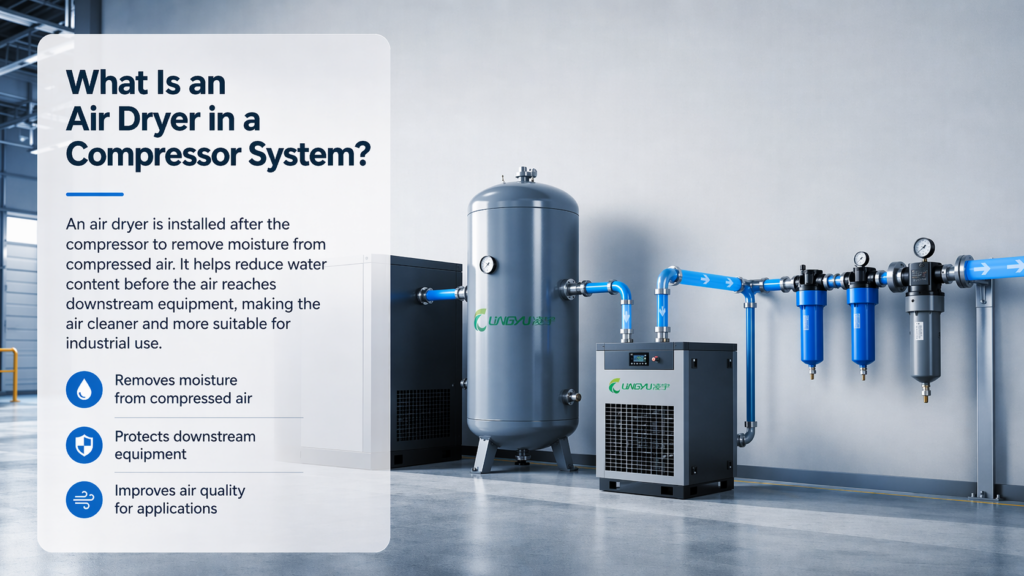
An air dryer is a device installed after the air compressor to reduce the moisture content in compressed air. When atmospheric air is compressed, the concentration of water vapor increases. As the compressed air cools, that moisture condenses into liquid water. If the water is not removed, it can enter pipelines, valves, tools, cylinders, and production equipment.
In a typical compressed air system, the air dryer works together with filters, tanks, and drains to improve air quality. The air compressor generates the compressed air, but the dryer makes that air suitable for applications that require stable and dry conditions.
Why Moisture Must Be Removed from Compressed Air
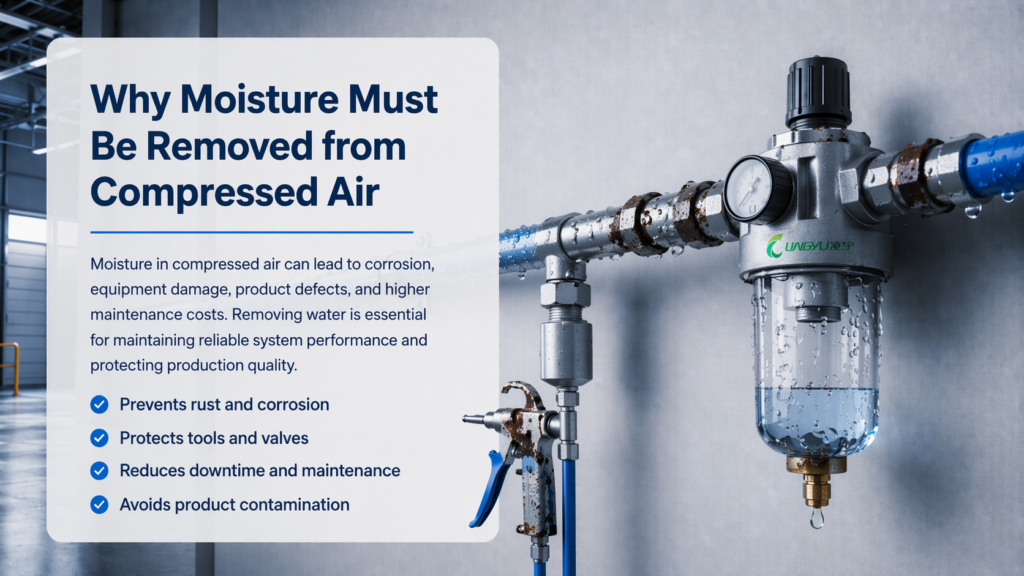
Moisture is one of the most common problems in compressed air systems. Even a high-quality air compressor cannot prevent water vapor from entering the system, because the compressor takes in ambient air that already contains humidity.
If wet compressed air is sent directly into production lines or pneumatic equipment, it may cause several problems:
- Rust and corrosion in pipes and tanks
- Damage to pneumatic tools and valves
- Poor performance of automation systems
- Product contamination in sensitive industries
- Water accumulation in air lines
- Freezing in cold operating environments
- Higher maintenance and downtime costs
This is why understanding how air dryer works in compressor systems is essential for selecting the right air treatment solution.
How Air Dryer Works in Compressor Systems
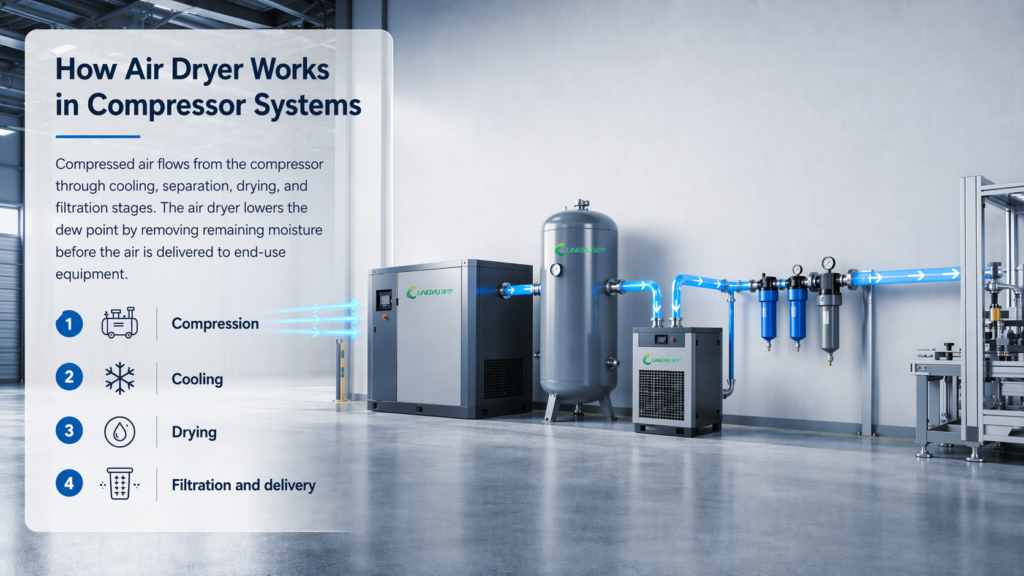
The basic working principle of an air dryer is to remove water vapor from compressed air before it is used. The exact method depends on the type of dryer installed, but the overall process follows the same logic.
First, the air compressor draws in atmospheric air and compresses it. This compressed air is hot and contains concentrated moisture. The air then moves through an aftercooler or air receiver, where part of the moisture condenses and can be drained out. After that, the air enters the air dryer, where the remaining moisture is removed more effectively.
The dryer lowers the dew point of the compressed air. The dew point is the temperature at which water vapor condenses into liquid. The lower the dew point, the drier the air. Once the moisture is reduced to the required level, the dry compressed air can be delivered safely to the end-use application.
Step-by-Step Air Flow in a Typical Compressor Dryer System
To better understand how air dryer works in compressor installations, it helps to look at the full air treatment process step by step.
1. Air Intake
The compressor takes in ambient air that contains dust, oil particles, and water vapor.
2. Air Compression
The compressor increases the air pressure. During compression, the air temperature rises and the moisture becomes more concentrated.
3. Cooling Stage
The hot compressed air passes through an aftercooler or storage tank. As the air cools, some of the water vapor condenses into liquid water.
4. Preliminary Water Removal
Condensate drains and separators remove some of the liquid water before the air enters the dryer.
5. Drying Process
The air dryer removes the remaining moisture by cooling the air or by using adsorbent materials, depending on the dryer type.
6. Filtration and Distribution
After drying, filters may remove remaining particles and oil aerosols. The cleaned and dried air is then sent to the factory air network or production equipment.
Main Types of Air Dryers Used with Compressors
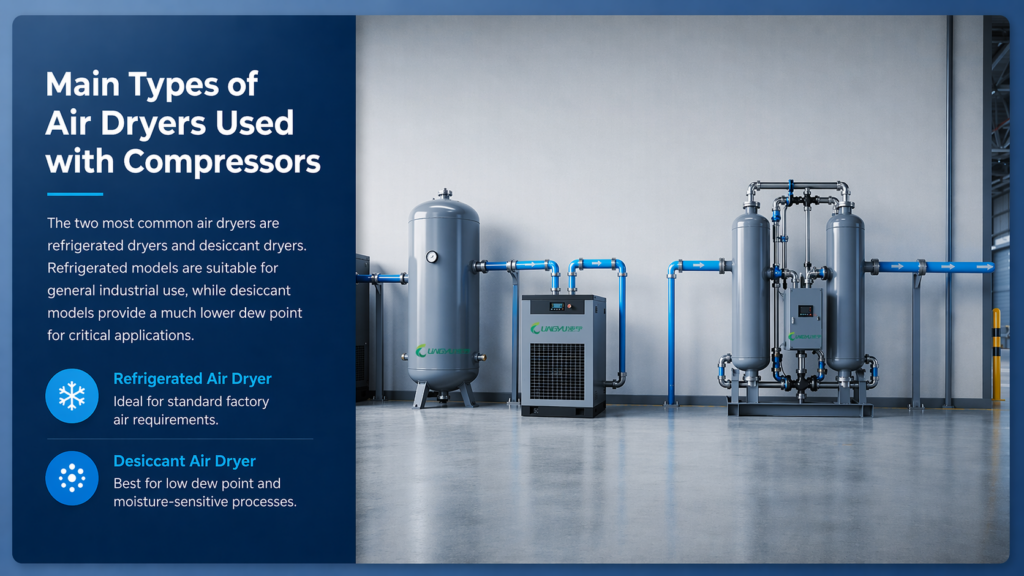
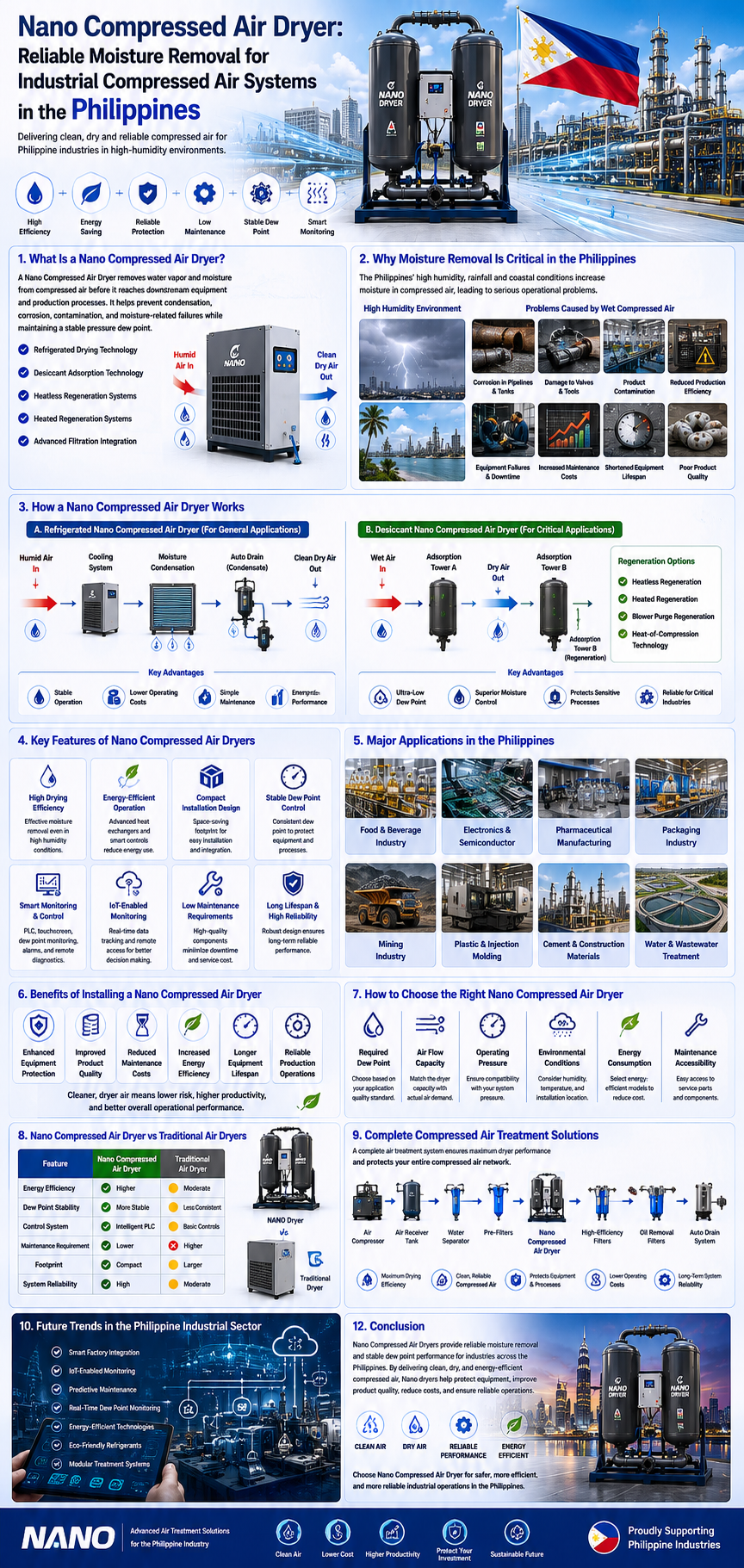
There are two main types of air dryers commonly used in compressor systems: refrigerated air dryers and desiccant air dryers. Each works differently and is suitable for different operating conditions.
Refrigerated Air Dryer
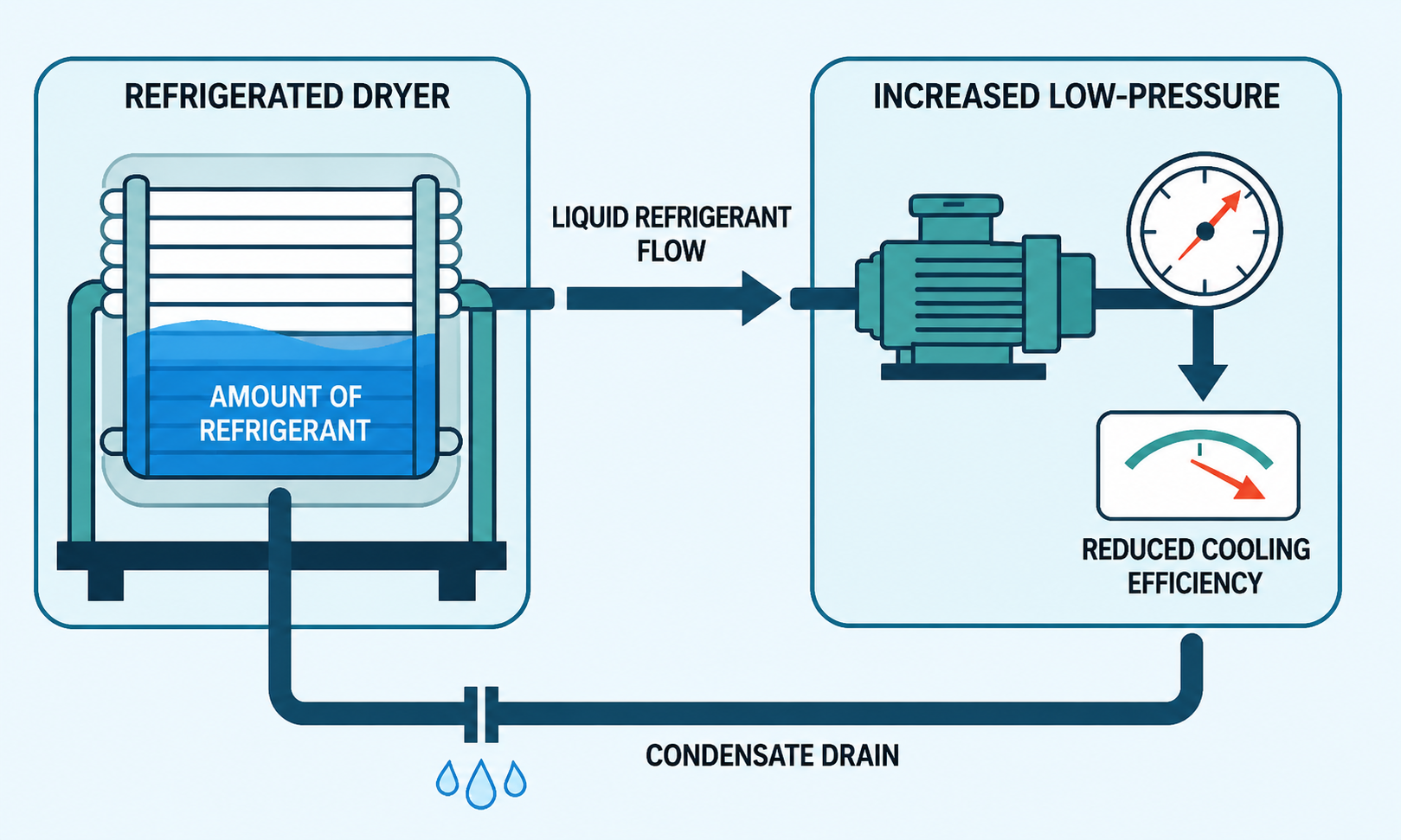
A refrigerated air dryer works by cooling compressed air to a low temperature, usually around 2°C to 10°C pressure dew point. When the air is cooled, moisture condenses into liquid water and is removed by a drain.
This type of dryer is widely used in general industrial applications because it is efficient, easy to operate, and cost-effective. It is suitable for factories where ultra-low dew point is not required.
The process is simple:
- Warm compressed air enters the dryer
- The refrigeration circuit cools the air
- Water vapor condenses into liquid
- The condensate is separated and drained
- The dry air is reheated slightly before leaving the dryer
A refrigerated dryer is a practical choice for many standard compressor systems.
Desiccant Air Dryer
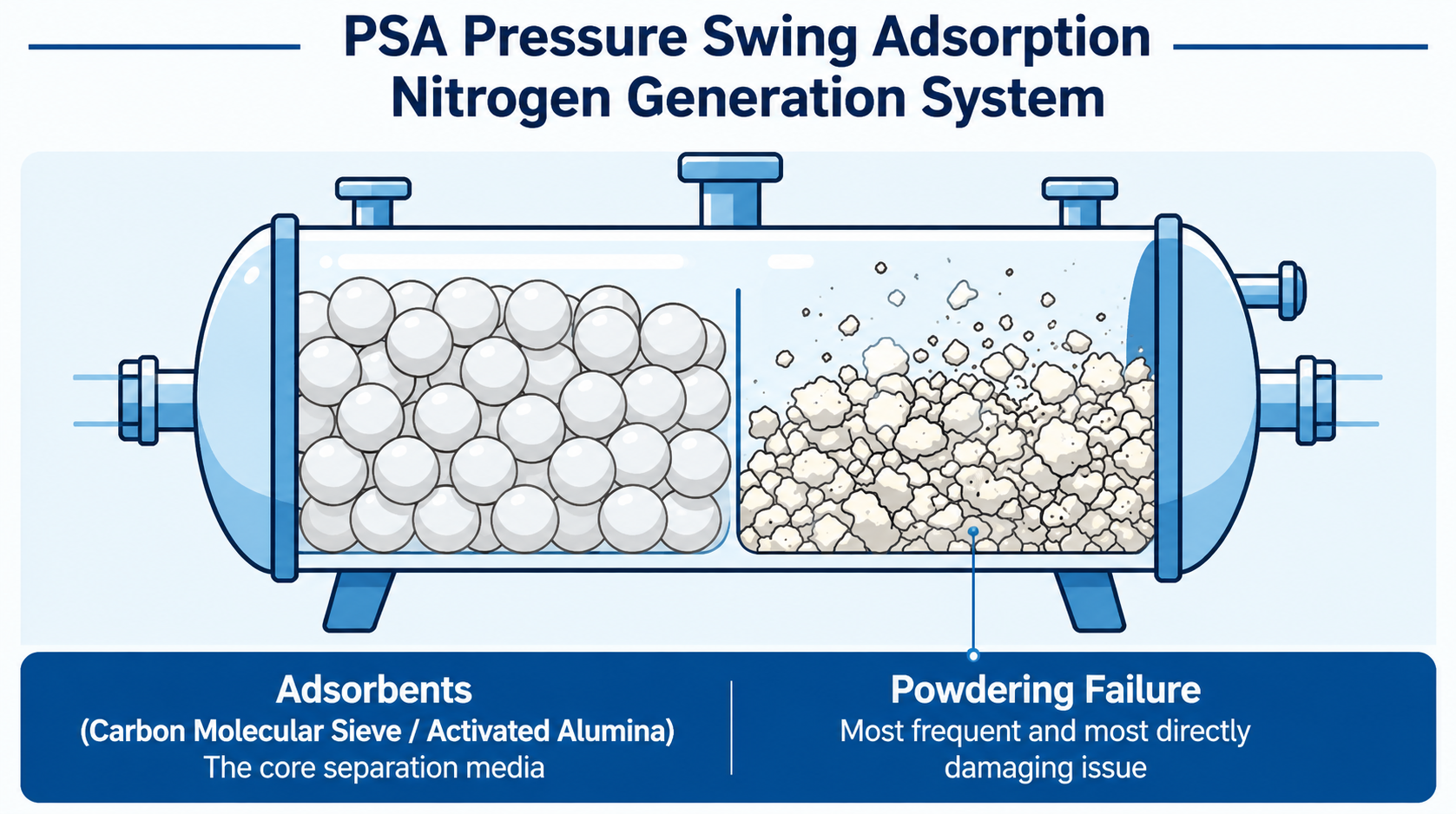
A desiccant air dryer, also called an adsorption dryer, works by passing compressed air through a bed of desiccant material such as activated alumina or molecular sieve. The desiccant adsorbs water vapor from the compressed air and produces much drier air than a refrigerated dryer.
This type of dryer is used when a very low dew point is required, such as -40°C or even -70°C. It is ideal for industries that need ultra-dry compressed air, including pharmaceuticals, electronics, chemical processing, and precision manufacturing.
Most desiccant dryers use two towers. One tower dries the air while the other regenerates the saturated desiccant. The towers switch automatically, allowing continuous operation.
How Refrigerated Air Dryer Works in a Compressor System
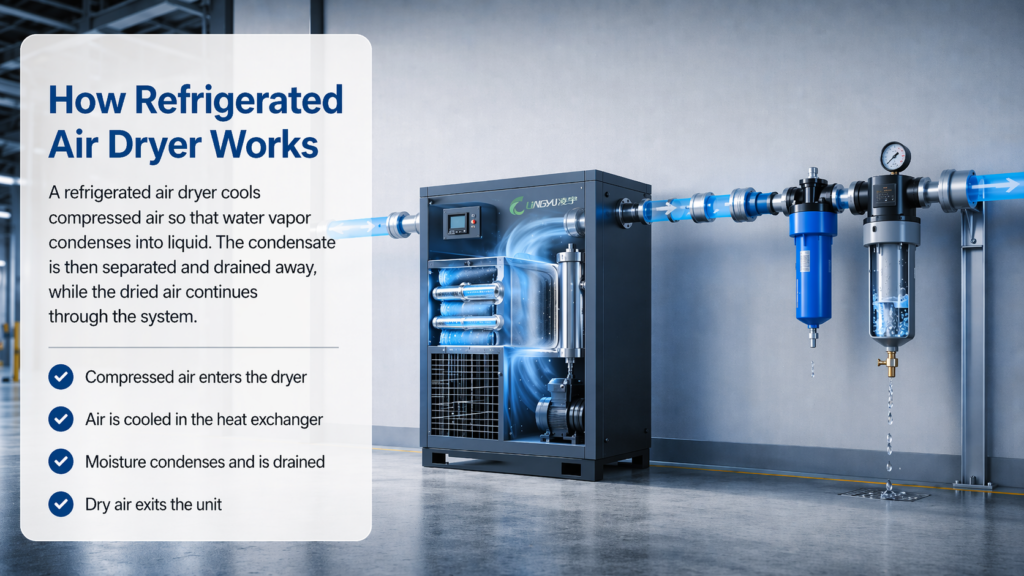
A refrigerated dryer is usually installed downstream of the air compressor and air receiver tank. Its job is to cool the compressed air enough for the moisture to condense out.
Inside the dryer, the compressed air passes through a heat exchanger and refrigeration section. The air temperature drops, and the water vapor turns into liquid condensate. That liquid is then separated from the airflow and discharged through an automatic drain. The dried air is then reheated slightly before leaving the unit, which helps reduce pipe sweating and improves delivery conditions.
For many factories, this is the most common answer to the question of how air dryer works in compressor systems, because refrigerated dryers are widely used in standard industrial air setups.
How Desiccant Air Dryer Works in a Compressor System
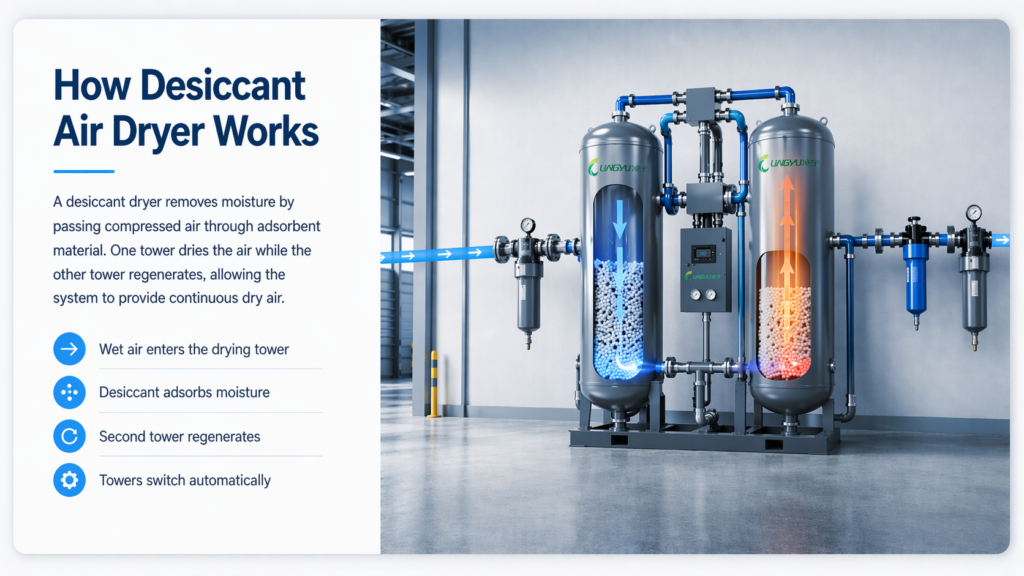
A desiccant dryer works differently from a refrigerated dryer. Instead of cooling the air, it removes moisture by adsorption.
Wet compressed air enters one drying tower filled with desiccant. As the air flows through the desiccant bed, the moisture is trapped on the surface of the material. The dried air exits the tower and moves to the downstream system.
At the same time, the second tower is being regenerated. Depending on the dryer design, regeneration may use dry purge air, external heaters, or a blower system. After a set cycle time, the towers switch roles. This design ensures continuous production of dry air.
Desiccant dryers are preferred when compressed air quality is critical and when moisture must be kept extremely low.
Where the Air Dryer Is Installed in a Compressor System
In most compressor systems, the air dryer is installed after the compressor and before the point of use. A common system layout is:
Air compressor → aftercooler → air receiver tank → pre-filter → air dryer → after-filter → point of use
This arrangement helps improve drying efficiency and protects the dryer from excessive contamination. Filters installed before the dryer remove oil aerosols, liquid water, and particles that could reduce dryer performance. Filters after the dryer provide additional air quality protection for sensitive equipment.
Correct installation is important for achieving the best results from the dryer.
Benefits of Using an Air Dryer with a Compressor
An air dryer provides several important benefits in a compressed air system.
Protects equipment
Dry air reduces corrosion, wear, and failure in valves, cylinders, tools, and pipelines.
Improves product quality
In industries such as food, pharmaceuticals, electronics, and painting, moisture can damage products or affect production consistency.
Reduces maintenance costs
By removing moisture, the dryer helps reduce rust, blockage, and equipment downtime.
Improves system reliability
Dry compressed air allows pneumatic components and automation systems to work more consistently.
Prevents freezing problems
In cold climates or low-temperature environments, dry air helps prevent ice formation inside air lines and valves.
How to Choose the Right Air Dryer for a Compressor
Choosing the right dryer depends on the application, air demand, and required air quality.
You should consider the following factors:
Required dew point
If standard dry air is enough, a refrigerated dryer is often suitable. If ultra-dry air is needed, a desiccant dryer is the better choice.
Air flow capacity
The dryer must match the actual flow rate of the compressor system.
Operating pressure and inlet temperature
Higher temperatures and varying pressures can affect dryer performance.
Application requirements
Different industries have different standards for air quality and moisture control.
Energy consumption
Refrigerated and desiccant dryers have different operating costs, so energy efficiency should be considered.
Installation environment
Ambient temperature, humidity, dust, and ventilation can all affect dryer performance.
Common Applications That Need Air Dryers
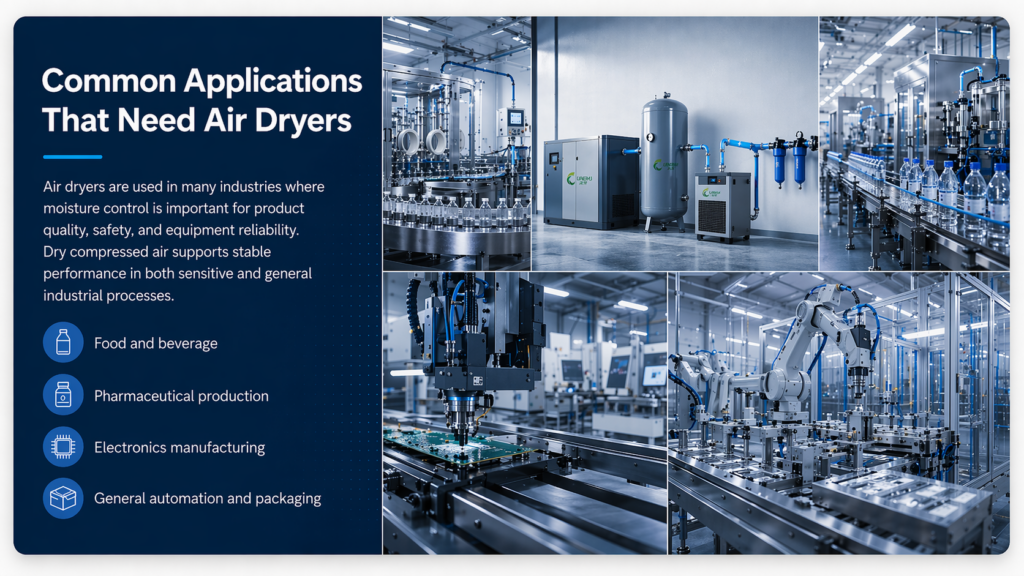
Many industries use air dryers because wet compressed air can cause serious production problems. Common applications include:
- Food and beverage processing
- Pharmaceutical production
- Electronics manufacturing
- Textile plants
- Packaging lines
- Automotive workshops
- Chemical processing
- Laboratories
- Pneumatic control systems
- General manufacturing
In all of these industries, stable air quality is important for protecting equipment and maintaining product quality.
Maintenance Tips for Compressor Air Dryers
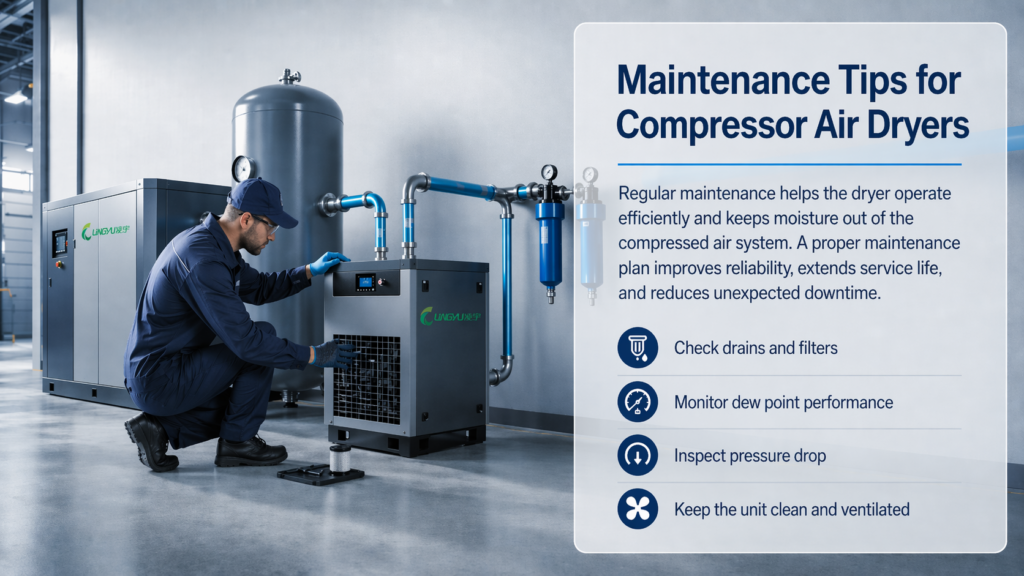
To keep an air dryer working properly, regular maintenance is essential. A poorly maintained dryer may lose efficiency and allow moisture to enter the system.
Typical maintenance tasks include:
- Checking automatic drains
- Replacing or cleaning filters
- Monitoring dew point performance
- Inspecting refrigeration components in refrigerated dryers
- Checking valves and desiccant condition in adsorption dryers
- Verifying pressure drop across the system
- Keeping the dryer installation area clean and ventilated
Routine maintenance helps extend service life and ensures stable performance.
Conclusion
If you want to understand how air dryer works in compressor systems, the answer is simple: the dryer removes moisture from compressed air so that the air can be used safely and efficiently in industrial applications. Without an air dryer, compressed air systems are more likely to suffer from corrosion, contamination, equipment damage, and inconsistent production performance.
Whether you choose a refrigerated air dryer for general use or a desiccant air dryer for low dew point applications, the right dryer can improve air quality, protect your equipment, and support long-term system reliability.
For any industrial compressor system, an air dryer is not just an optional accessory. It is a key component of efficient and dependable compressed air treatment.