Compressed air is an essential utility across many industries in the Philippines. From food and beverage manufacturing plants and electronics assembly facilities to pharmaceutical production, mining operations, packaging factories, and industrial processing plants, compressed air plays a vital role in daily operations.
However, the Philippines’ tropical climate presents unique challenges for compressed air systems. High humidity levels, frequent rainfall, coastal conditions, and seasonal typhoons can significantly increase moisture content in compressed air. Without effective air treatment, excess moisture can cause corrosion, equipment failures, product contamination, and costly production downtime.
A Nano Compressed Air Dryer is designed to remove moisture from compressed air systems and provide clean, dry, and reliable compressed air for demanding industrial applications throughout the Philippines.
What Is a Nano Compressed Air Dryer?
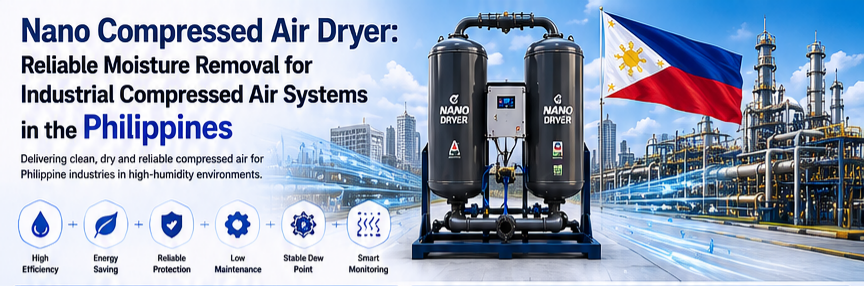
A Nano Compressed Air Dryer is an advanced compressed air treatment system engineered to remove water vapor and moisture from compressed air before it reaches downstream equipment and production processes.
By maintaining a stable pressure dew point, Nano compressed air dryers help prevent condensation, corrosion, contamination, and moisture-related equipment failures.
Depending on the application requirements, Nano compressed air dryers may incorporate:
- Refrigerated drying technology
- Desiccant adsorption drying technology
- Heatless regeneration systems
- Heated regeneration systems
- Advanced filtration integration
These systems are designed to deliver reliable compressed air quality while maximizing energy efficiency and long-term operational performance.
Why Moisture Removal Is Critical in the Philippines
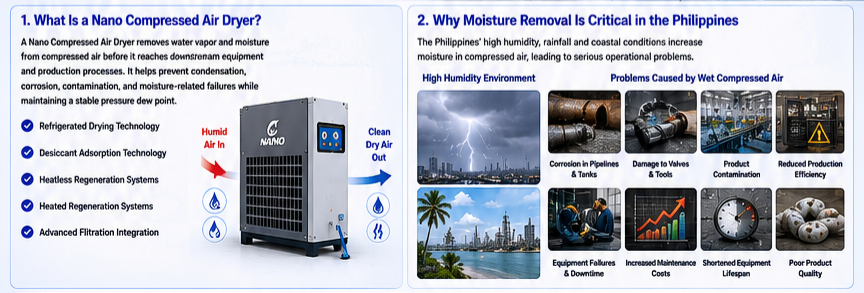
The Philippines experiences high humidity throughout the year, particularly during the rainy season and in coastal industrial areas such as Metro Manila, Cavite, Laguna, Batangas, Cebu, Davao, and Subic.
When humid air enters a compressor, water vapor concentration increases significantly during compression. Without proper drying, moisture can accumulate throughout the compressed air network and create serious operational problems.
Common issues caused by wet compressed air include:
- Corrosion inside pipelines and air receiver tanks
- Damage to pneumatic cylinders, valves, and tools
- Product contamination
- Reduced production efficiency
- Equipment failures and unexpected shutdowns
- Increased maintenance costs
- Shortened equipment lifespan
- Poor product quality
A Nano compressed air dryer effectively eliminates these risks by delivering clean and dry compressed air with controlled dew point performance.
How a Nano Compressed Air Dryer Works
Refrigerated Nano Compressed Air Dryer
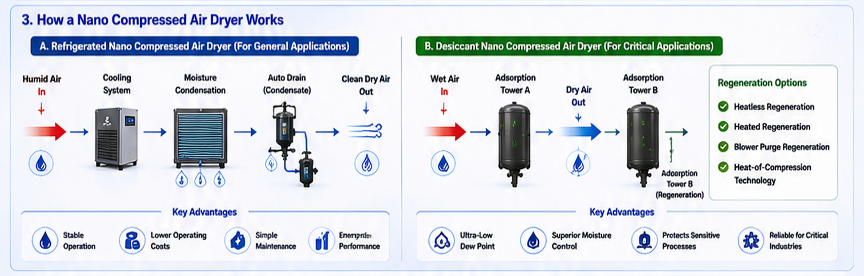
A refrigerated dryer cools compressed air to condense moisture into liquid form. The condensate is automatically separated and discharged from the system.
This type of dryer is widely used in general industrial applications requiring moderate dew point performance.
Common applications include:
- Food and beverage production
- Packaging facilities
- Plastic manufacturing
- Automotive parts production
- General manufacturing plants
- Water treatment facilities
Key advantages include:
- Stable operation
- Lower operating costs
- Simple maintenance
- Energy-efficient performance
Desiccant Nano Compressed Air Dryer
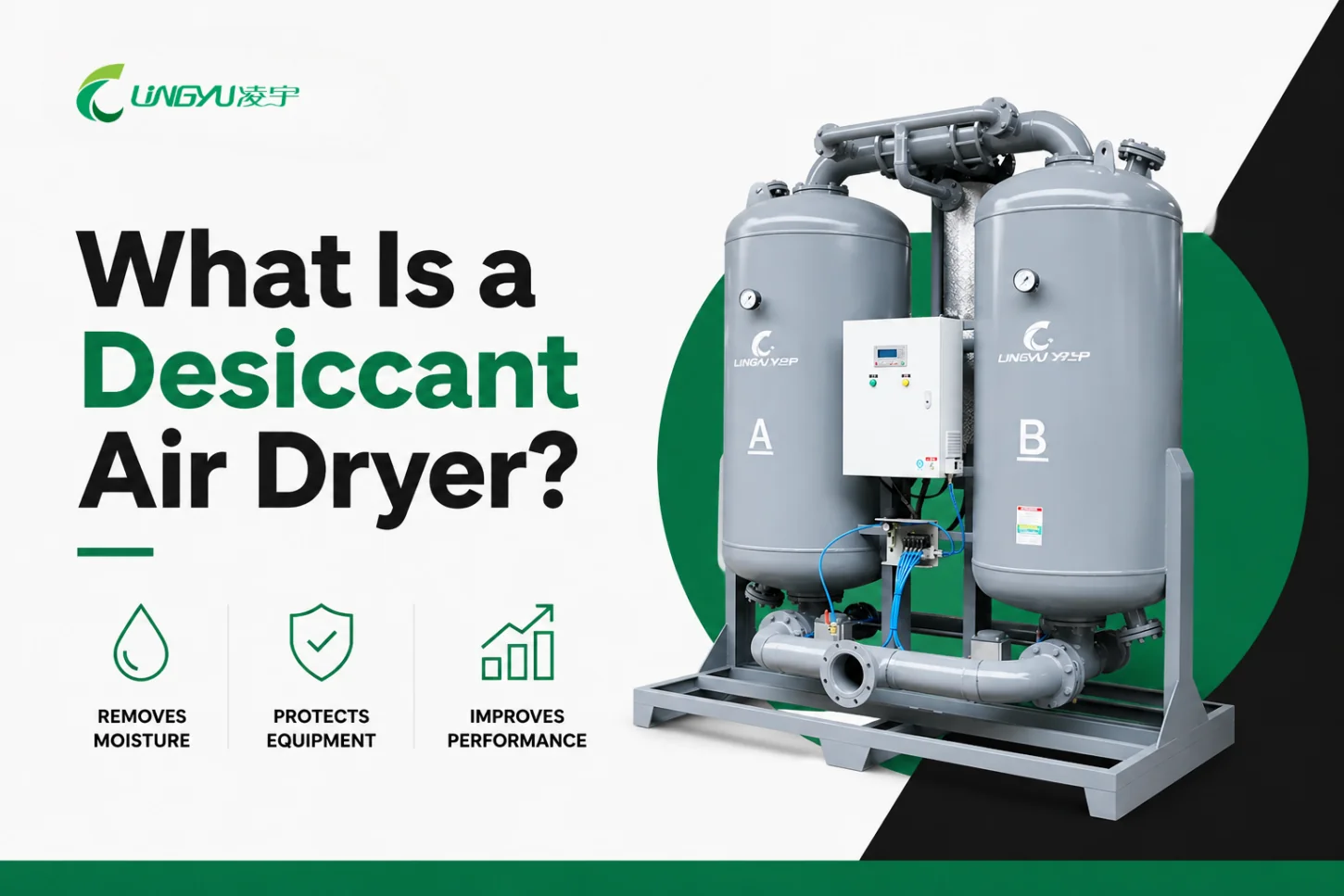
Desiccant dryers use adsorption materials to capture moisture from compressed air and achieve very low pressure dew points.
These systems are ideal for industries requiring ultra-dry compressed air.
Typical applications include:
- Electronics and semiconductor assembly
- Pharmaceutical manufacturing
- Medical device production
- Precision engineering
- Laser cutting operations
- High-specification industrial processes
Nano desiccant dryers may utilize:
- Heatless regeneration
- Heated regeneration
- Blower purge regeneration
- Heat-of-compression technology
These systems provide superior moisture control for critical production environments.
Key Features of Nano Compressed Air Dryers
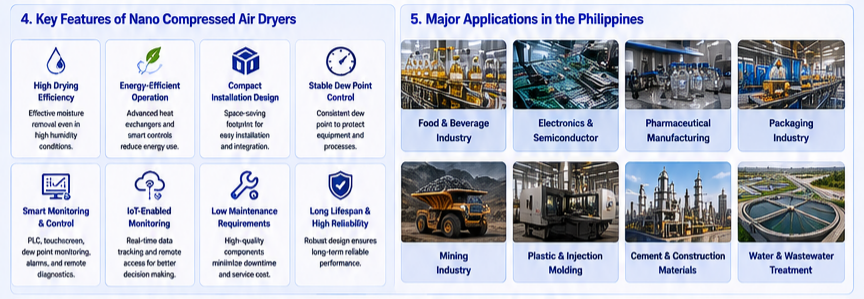
High Drying Efficiency
Nano compressed air dryers provide effective moisture removal even under the high-humidity operating conditions commonly found in the Philippines.
Energy-Efficient Operation
With rising industrial energy costs, efficient compressed air treatment has become increasingly important. Advanced heat exchanger designs and intelligent controls help reduce operating expenses.
Compact Installation Design
Many manufacturing facilities require space-saving equipment. Nano dryers feature compact footprints that simplify installation and system integration.
Stable Dew Point Control
Consistent dew point performance helps maintain reliable compressed air quality and protects downstream equipment.
Smart Monitoring and Control
Modern Nano dryers can be equipped with:
- PLC-based controls
- Touchscreen interfaces
- Dew point monitoring
- Alarm systems
- Remote diagnostics
- IoT-enabled monitoring
These features support modern industrial automation initiatives.
Low Maintenance Requirements
Robust engineering and high-quality components help minimize maintenance frequency and maximize system uptime.
Major Applications in the Philippines
Food and Beverage Industry
The food and beverage sector is one of the largest manufacturing industries in the Philippines. Dry compressed air is essential for packaging, conveying, bottling, and food processing operations.
Electronics and Semiconductor Assembly
The Philippines is a major electronics manufacturing and export hub. Clean and dry compressed air helps protect sensitive electronic components and improve production quality.
Pharmaceutical Manufacturing
Moisture-free compressed air supports GMP-compliant production environments and helps maintain product integrity.
Packaging Industry
Compressed air is widely used in automated packaging systems where reliable air quality directly affects production efficiency.
Mining Industry
Mining operations rely on compressed air for drilling equipment, pneumatic tools, instrumentation, and process systems. Dry air helps improve equipment reliability in demanding environments.
Plastic and Injection Molding
Manufacturers use compressed air throughout molding, assembly, and packaging processes where moisture control is critical.
Cement and Construction Materials
Compressed air supports automation systems, material handling equipment, and process controls in large-scale industrial facilities.
Water and Wastewater Treatment
Compressed air is used for aeration systems, valve controls, instrumentation, and automation processes.
Benefits of Installing a Nano Compressed Air Dryer
Enhanced Equipment Protection
Dry compressed air reduces corrosion, wear, and moisture-related equipment failures.
Improved Product Quality
Stable air quality helps manufacturers maintain consistent production standards and reduce defects.
Reduced Maintenance Costs
Eliminating moisture-related damage significantly lowers repair and maintenance expenses.
Increased Energy Efficiency
Efficient compressed air treatment improves overall system performance and reduces energy consumption.
Longer Equipment Lifespan
Protecting compressors, pipelines, and pneumatic equipment helps maximize equipment life.
Reliable Production Operations
Consistent compressed air quality minimizes unexpected downtime and improves productivity.

How to Choose the Right Nano Compressed Air Dryer
When selecting a compressed air dryer for industrial applications in the Philippines, several factors should be considered.
Required Dew Point
Different industries require different air quality standards. Electronics, pharmaceutical, and medical manufacturing applications often require lower dew points than general industrial processes.
Air Flow Capacity
The dryer should be properly sized according to actual compressed air demand.
Operating Pressure
System pressure requirements must be compatible with compressors and downstream equipment.
Environmental Conditions
High humidity, seasonal rainfall, and warm temperatures should be considered when selecting a dryer.
Energy Consumption
Energy-efficient dryers help reduce long-term operating expenses.
Maintenance Accessibility
Easy access to service components simplifies maintenance and improves operational efficiency.
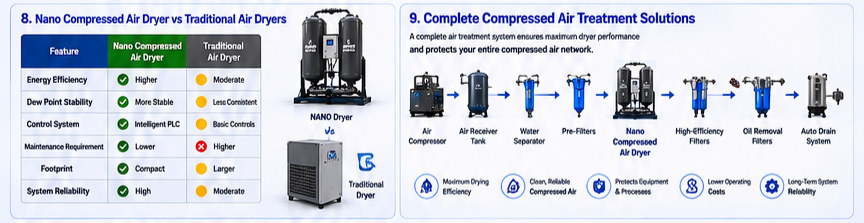
Nano Compressed Air Dryer vs Traditional Air Dryers
| Feature | Nano Compressed Air Dryer | Traditional Air Dryer |
|---|---|---|
| Energy Efficiency | Higher | Moderate |
| Dew Point Stability | More Stable | Less Consistent |
| Control System | Intelligent PLC | Basic Controls |
| Maintenance Requirement | Lower | Higher |
| Footprint | Compact | Larger |
| System Reliability | High | Moderate |
These advantages make Nano compressed air dryers increasingly popular among industrial users across the Philippines.
Complete Compressed Air Treatment Solutions
For optimal performance, a Nano compressed air dryer should be integrated into a complete compressed air treatment system, including:
- Air compressor
- Air receiver tank
- Water separator
- Pre-filters
- Refrigerated or desiccant dryer
- High-efficiency particulate filters
- Oil removal filters
- Automatic drain systems
Proper system integration helps maximize drying efficiency and ensures long-term system reliability.
Future Trends in the Philippine Industrial Sector
As manufacturers continue investing in automation and operational efficiency, compressed air treatment technologies are becoming increasingly advanced.
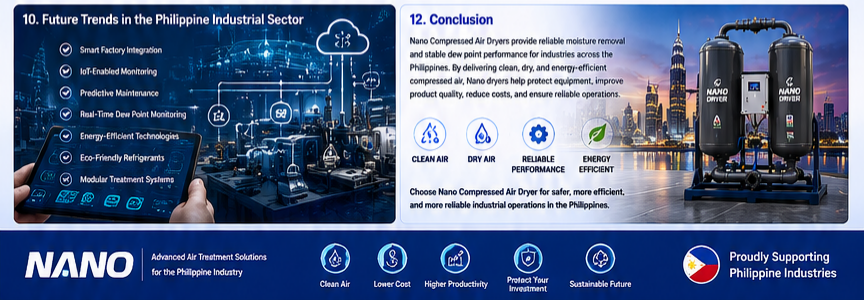
Key industry trends include:
- Smart factory implementation
- IoT-based monitoring systems
- Predictive maintenance solutions
- Real-time dew point monitoring
- Energy-efficient compressed air systems
- Environmentally friendly refrigerants
- Modular air treatment solutions
These innovations help businesses improve productivity while reducing operating costs.
Conclusion
A Nano Compressed Air Dryer is an essential solution for industries that require clean, dry, and reliable compressed air under the Philippines’ high-humidity operating conditions.
By effectively removing moisture and maintaining stable dew point performance, Nano compressed air dryers help protect equipment, improve product quality, reduce maintenance costs, and enhance operational efficiency.
Whether used in food and beverage manufacturing, electronics assembly, pharmaceutical production, mining operations, packaging facilities, plastic manufacturing, cement production, or water treatment plants, Nano compressed air dryers deliver dependable performance and long-term value.
Choosing the right compressed air dryer based on air quality requirements, flow demand, and environmental conditions can help Philippine businesses achieve safer, more efficient, and more reliable industrial operations.