What Is an Air Dryer System for Air Compressors?
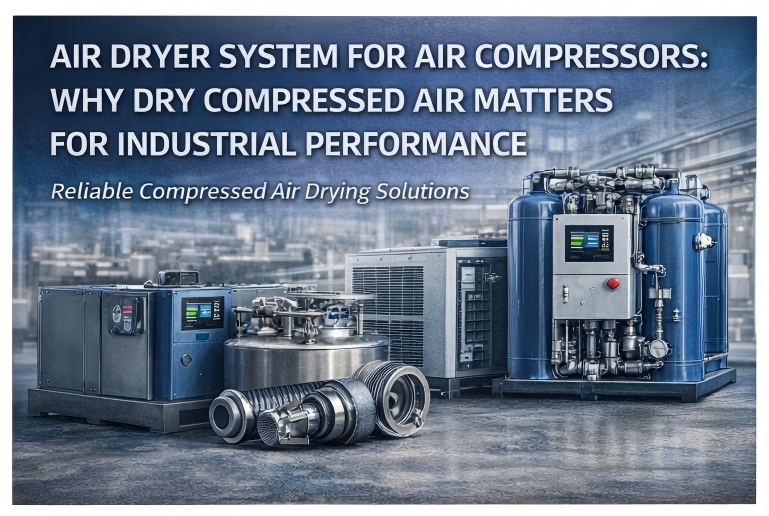
An air dryer system for air compressors is a key part of a complete compressed air treatment solution. Its main purpose is to remove moisture from compressed air before the air reaches downstream equipment, pipelines, tools, or production processes.
When air is compressed, the concentration of water vapor increases significantly. As this compressed air cools, the moisture begins to condense into liquid water. If that water is not removed, it can cause corrosion, damage pneumatic equipment, affect product quality, and reduce the overall efficiency of the compressed air system.
This is why an air dryer system is not simply an optional accessory. For many industrial applications, it is an essential part of maintaining stable air quality and reliable production performance.
Why Compressed Air Needs Drying
Atmospheric air naturally contains moisture. When an air compressor draws in and compresses that air, the moisture becomes more concentrated. As the compressed air moves through the system and its temperature drops, water vapor condenses into liquid water.
Without proper drying, this moisture can create several problems. It can rust pipes and tanks, damage valves and cylinders, reduce the performance of pneumatic tools, and create maintenance issues throughout the system. In more sensitive industries such as food processing, electronics, pharmaceuticals, and precision manufacturing, moisture can also affect the final product.
A properly selected air dryer system for air compressors helps solve these problems by reducing the moisture content of compressed air and improving the reliability of the entire air network.
How an Air Dryer System Works
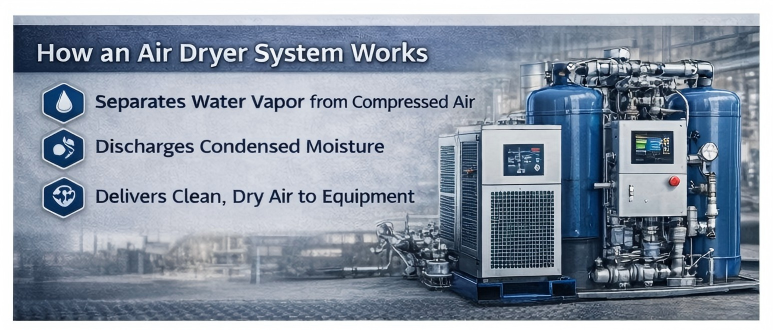
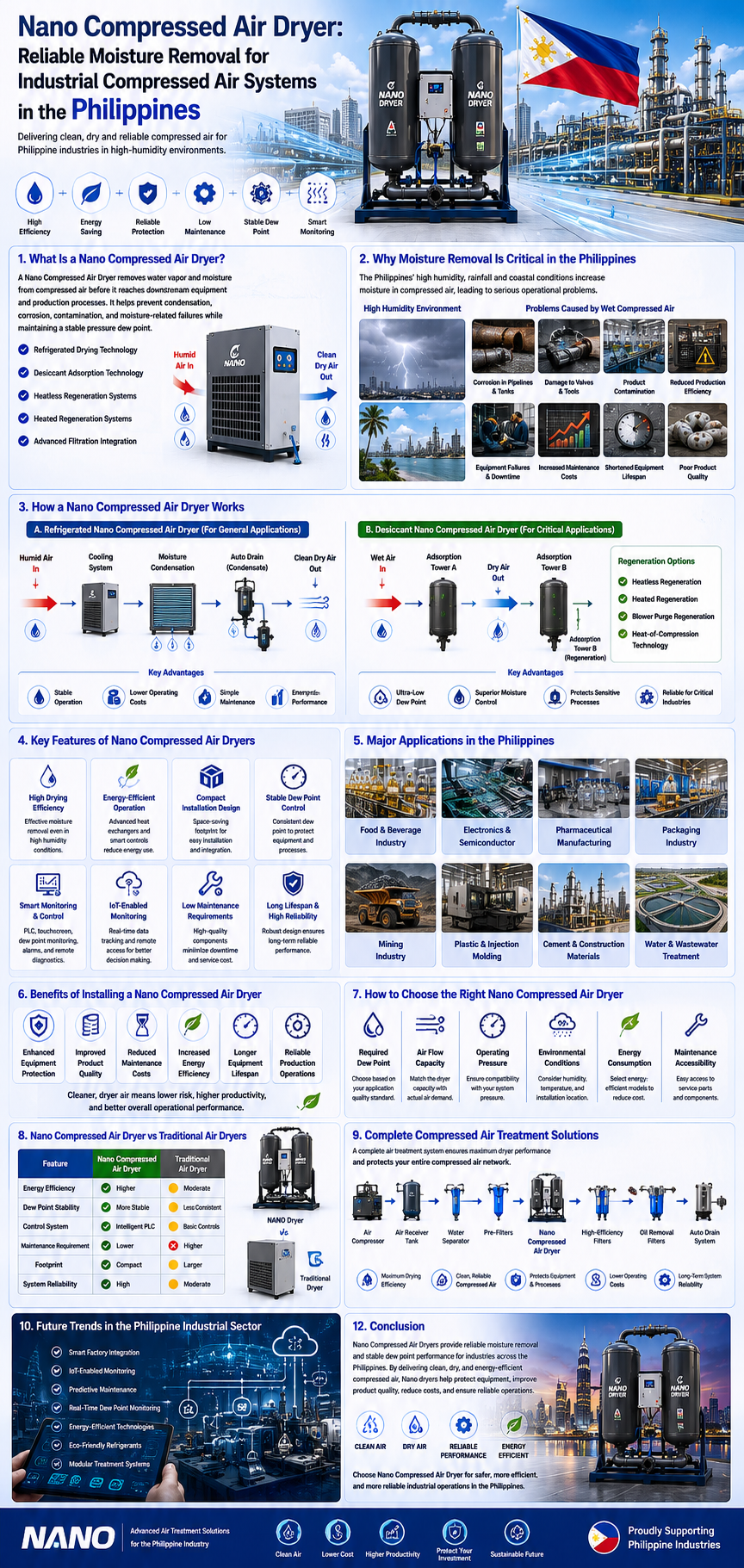
An air dryer system works by separating water vapor from compressed air and discharging the condensate before the air is used in production or equipment operation.
Depending on the type of dryer, the drying process may be based on cooling or adsorption. In general, the goal is the same: lower the moisture level in the compressed air so that condensation does not occur inside the system.
A typical air dryer system may include the dryer itself, pre-filters, after-filters, automatic drains, and control components. Together, these parts help deliver cleaner and drier compressed air to the point of use.
Main Benefits of an Air Dryer System for Air Compressors
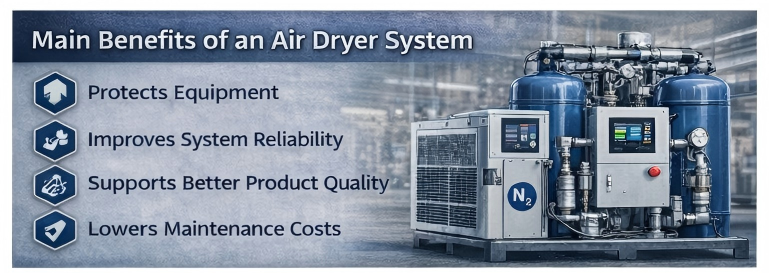
Using an air dryer system offers several important advantages for industrial users.
First, it helps protect equipment. Dry air reduces the risk of corrosion, rust, and internal water damage in pipes, air receivers, valves, cylinders, and pneumatic devices.
Second, it improves system reliability. When moisture is removed effectively, pneumatic equipment can operate more smoothly and consistently, reducing unplanned downtime.
Third, it supports better product quality. In industries where compressed air comes into contact with products, packaging, or sensitive processes, dry air helps maintain more stable production conditions.
Fourth, it lowers maintenance costs. Water in the air system can lead to clogged filters, damaged components, and frequent repairs. Dry compressed air reduces these risks and helps extend equipment life.
Fifth, it improves overall efficiency. A well-designed air treatment system allows compressed air equipment to perform more effectively, reducing waste and supporting long-term operating stability.
Common Types of Air Dryer Systems
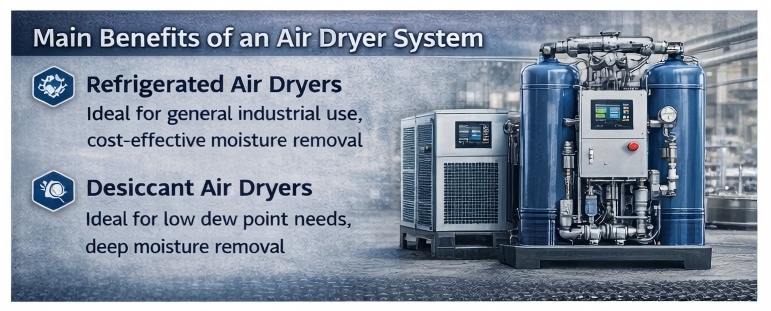
There are different types of air dryer systems for air compressors, and the right choice depends on the required air quality, operating environment, and application.
Refrigerated Air Dryers
Refrigerated air dryers are widely used in general industrial applications. They cool compressed air so that water vapor condenses and can be removed from the system. These dryers are often chosen for factories and workshops that need reliable, cost-effective moisture removal for standard compressed air use.
They are known for stable performance, simple operation, and good energy efficiency in general-purpose applications.
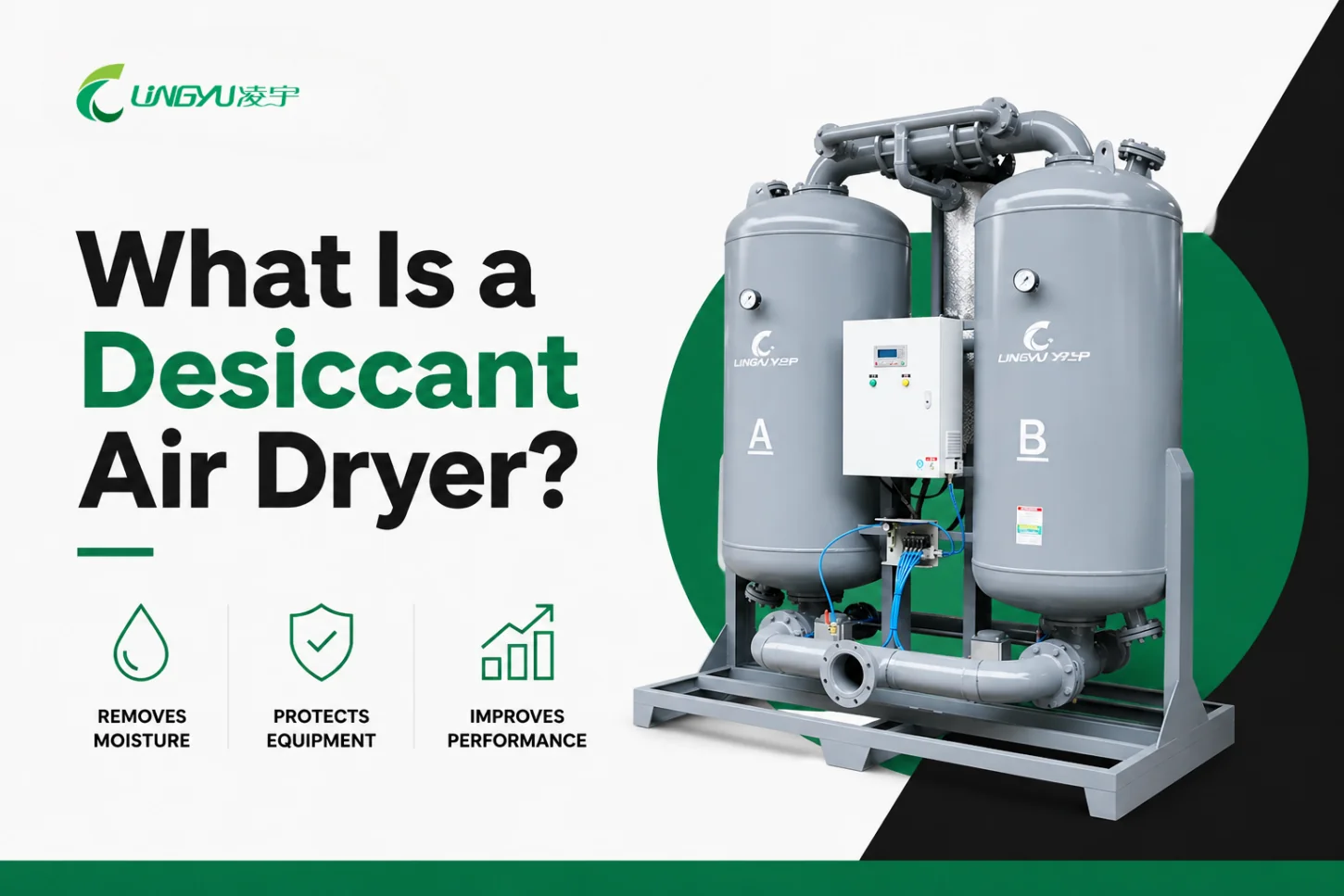
Desiccant Air Dryers
Desiccant air dryers are used when a much lower dew point is required. These systems use adsorption materials such as activated alumina or molecular sieve to remove water vapor more deeply than refrigerated dryers.
They are commonly used in industries that require very dry air, such as electronics, pharmaceuticals, laboratories, instrumentation, and other precision applications.
Combined Drying Systems
In some cases, companies use combined air drying systems to achieve higher drying performance and better air quality. These systems may integrate multiple drying and filtration stages to meet more demanding industrial requirements.
Applications of Air Dryer Systems for Air Compressors
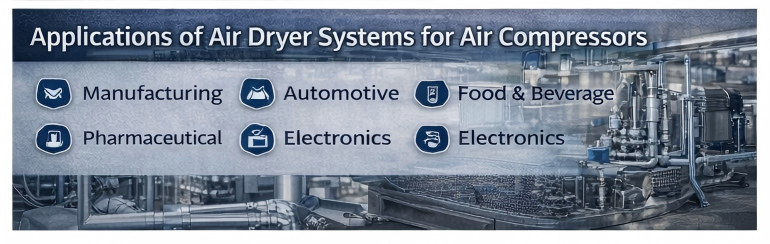
Air dryer systems are used in a wide range of industries because compressed air is one of the most common utility sources in industrial production.
They are commonly found in manufacturing plants, automotive workshops, food and beverage facilities, textile factories, electronics production lines, chemical processing plants, packaging systems, and medical or pharmaceutical environments.
In all of these applications, the quality of compressed air has a direct effect on equipment condition, operating stability, and production efficiency. That is why choosing the right air dryer system for air compressors is so important.
How to Choose the Right Air Dryer System
Selecting the right air dryer system requires more than simply matching flow capacity. Several important factors should be considered.
One of the first is the required dew point. Different processes need different levels of dryness. General factory air may only require a standard refrigerated dryer, while sensitive applications may need a desiccant dryer with a much lower dew point.
Air flow demand is also important. The dryer must be properly sized to handle the actual compressed air volume, including peak demand periods.
Inlet air temperature and operating pressure should also be evaluated, as these conditions affect dryer performance. Ambient temperature matters as well, especially in hot or humid environments where drying loads may be higher.
It is also important to consider maintenance requirements, installation space, and long-term operating cost. A reliable manufacturer can help ensure that the system is properly configured for the user’s actual working conditions.
The Importance of a Complete Compressed Air Treatment Solution
An air dryer alone is highly important, but it works best as part of a complete compressed air treatment system. In most industrial settings, the full solution may include an air compressor, air receiver tank, pre-filters, air dryer, fine filters, automatic drains, and a properly designed distribution network.
When these components work together, the system can provide cleaner, drier, and more stable compressed air. This improves the performance of downstream equipment and reduces the risk of moisture-related problems.
For companies that depend on compressed air every day, investing in a complete treatment solution is often more cost-effective than dealing with repeated failures and maintenance caused by poor air quality.
Why an Air Dryer System Is a Smart Investment
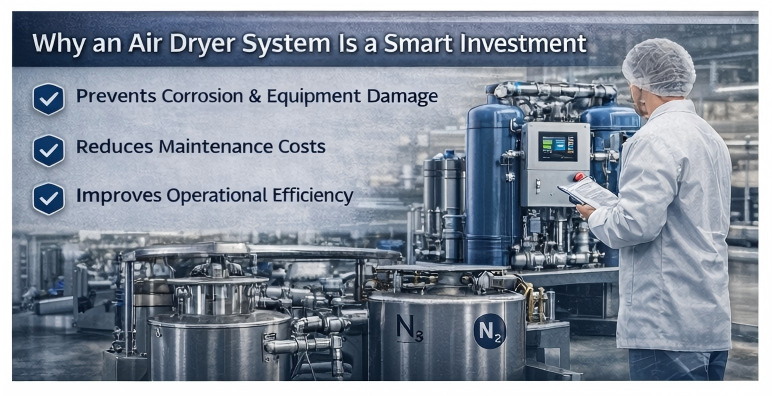
Moisture in compressed air may seem like a small issue at first, but over time it can cause serious operational problems. Corrosion, product defects, equipment wear, downtime, and higher energy use can all result from inadequate air treatment.
An efficient air dryer system for air compressors helps prevent these issues before they affect production. It protects equipment, improves air quality, supports smoother operations, and contributes to better long-term cost control.
For businesses that want reliable compressed air performance, an air dryer system is not just useful. It is a practical and necessary investment.
Conclusion
An air dryer system for air compressors plays a critical role in removing moisture from compressed air and protecting industrial systems from water-related damage. It helps improve equipment reliability, maintain production quality, reduce maintenance costs, and support efficient operation across a wide range of industries.
Whether the application requires a refrigerated dryer for general use or a desiccant dryer for low dew point performance, selecting the right drying solution is essential for building a stable and dependable compressed air system.