Compressed air dryers play a critical role in industrial air treatment systems. They remove moisture from compressed air, protect downstream equipment, improve product quality, and help maintain stable production. However, like any mechanical system, dryers can develop faults over time. When performance drops, timely air dryer repair is essential to prevent larger system problems, costly downtime, and unnecessary equipment damage.
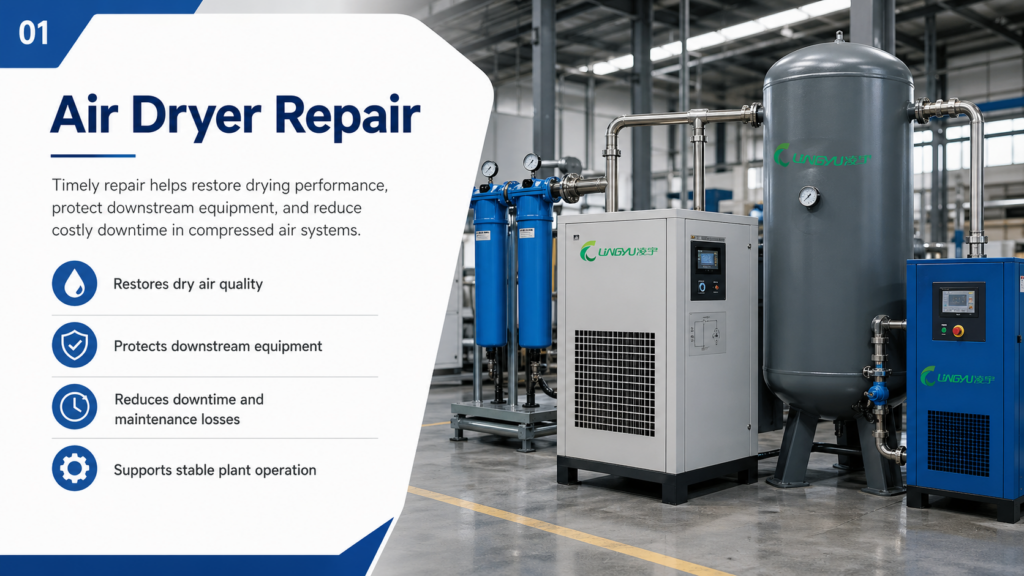
Whether the system uses a refrigerated air dryer or a desiccant air dryer, proper repair and maintenance can help restore efficiency and extend service life. Understanding the common causes of failure, warning signs, and repair priorities is the first step toward keeping the compressed air system running reliably.
Why Air Dryer Repair Is Important
When an air dryer is not working correctly, moisture begins to pass through the system. This can lead to corrosion in pipelines, damage to pneumatic tools, unstable instrument performance, contamination in production processes, and higher maintenance costs.
In many industries, poor air quality directly affects operations. Food processing, pharmaceuticals, electronics, chemical production, textiles, and general manufacturing all rely on dry compressed air for stable performance. A delayed repair can turn a small issue into a larger failure that affects the entire plant.
This is why professional and timely air dryer repair is not only about fixing one machine. It is about protecting the full compressed air system.
Common Signs That an Air Dryer Needs Repair
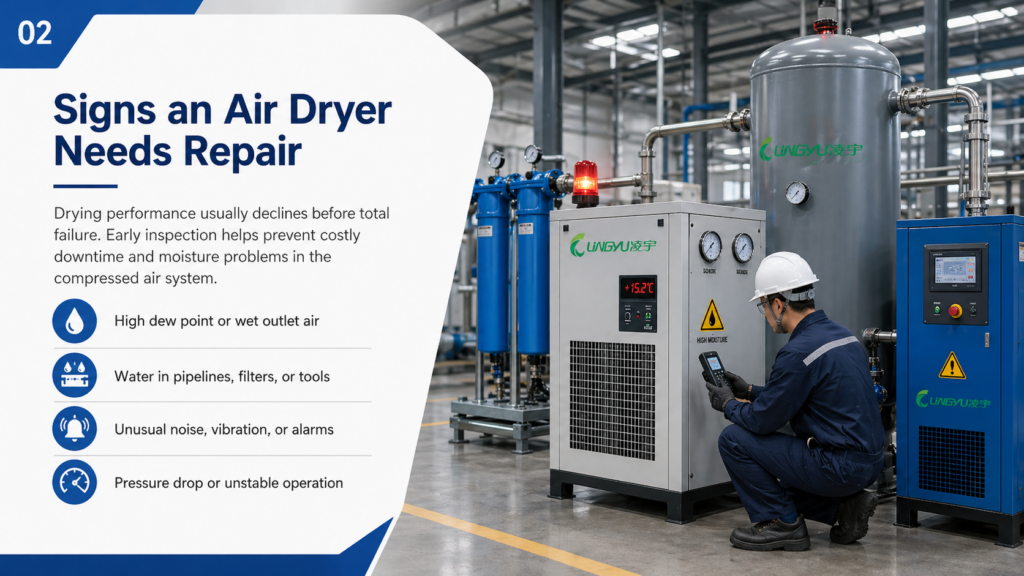
In many cases, an air dryer does not fail suddenly. The system usually shows warning signs before a major breakdown occurs.
Common signs include:
- Higher than normal dew point
- Moisture appearing in downstream air lines
- Water in filters, tanks, or tools
- Unstable air pressure or pressure drop
- Unusual noise or vibration
- Poor cooling performance in refrigerated dryers
- Valve switching problems in desiccant dryers
- Alarm messages or controller faults
- Increased energy consumption
- Frequent system shutdowns
When these symptoms appear, the dryer should be inspected as soon as possible.
Main Causes of Air Dryer Failure
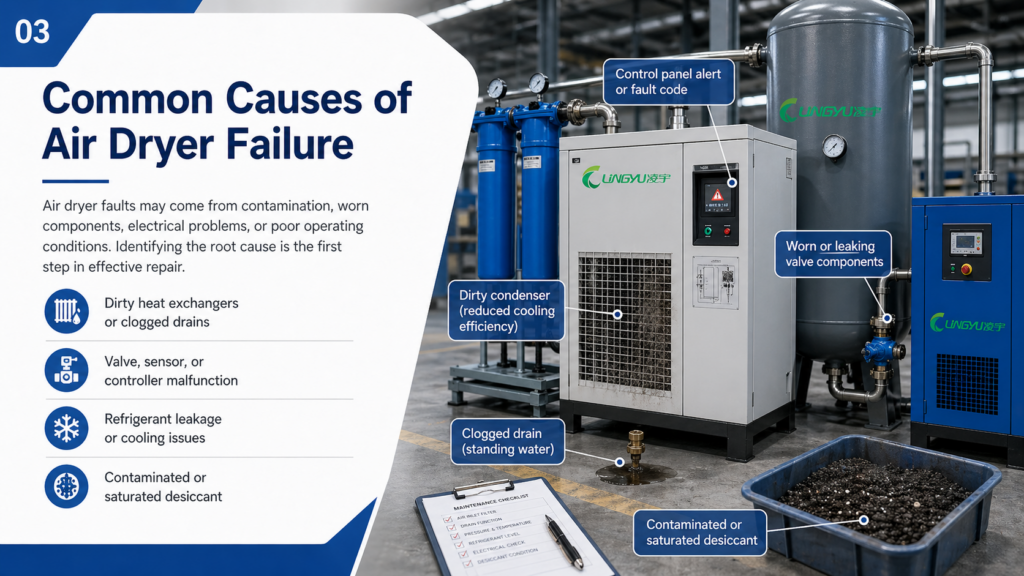
Air dryer problems can come from mechanical wear, electrical issues, poor maintenance, contamination, or unsuitable operating conditions. The exact cause depends on the dryer type and system design.
For refrigerated dryers, common causes include refrigerant leakage, clogged heat exchangers, failed fans, dirty condensers, faulty drains, pressure switch failure, and controller issues.
For desiccant dryers, common causes include saturated or degraded desiccant, valve failure, purge air loss, heater malfunction, blower failure, poor tower switching, and control system faults.
In many plants, a dryer fails not because of one major defect, but because small maintenance issues are ignored over time.
Air Dryer Repair for Refrigerated Dryers
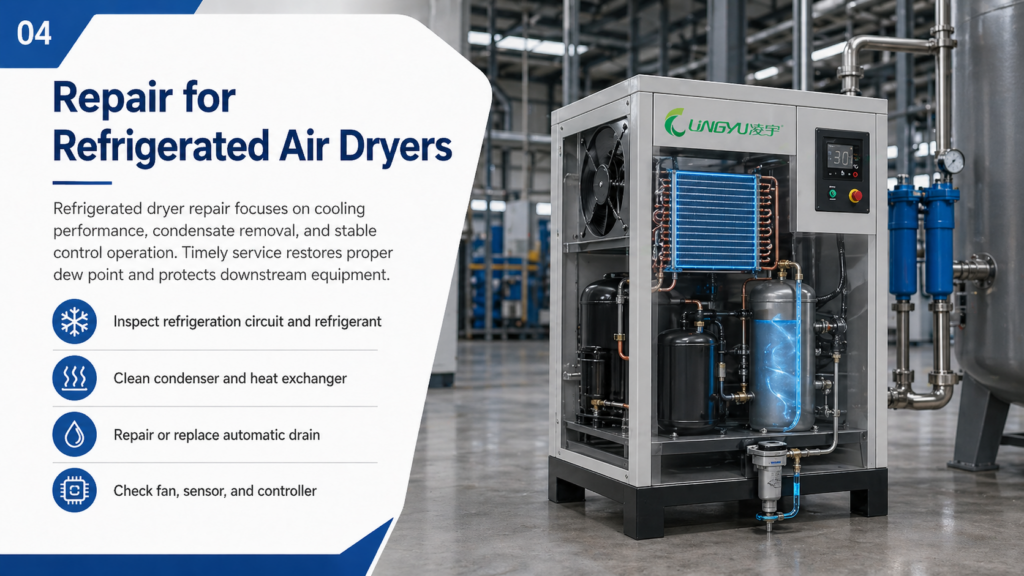
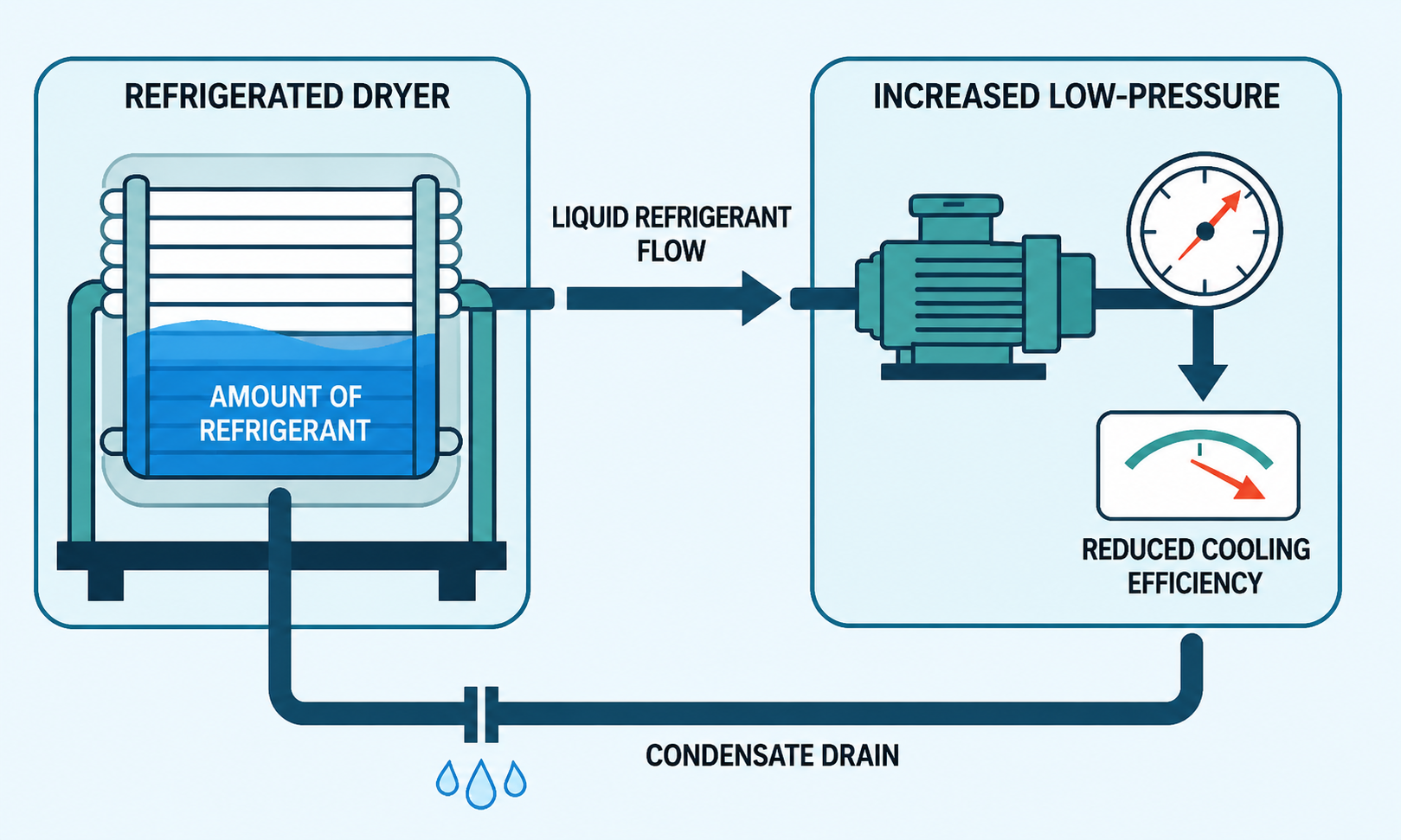
A refrigerated air dryer removes moisture by cooling compressed air so that water vapor condenses into liquid and can be drained away. When this process is interrupted, the air leaving the dryer may remain too wet.
Typical refrigerated dryer repair items include:
Refrigeration Circuit Inspection
If the dryer cannot achieve the required dew point, the refrigeration system should be checked. Low refrigerant charge, compressor issues, or blocked refrigeration components can reduce cooling performance.
Condenser and Heat Exchanger Cleaning
Dust, oil, and dirt can block heat transfer surfaces. This reduces cooling efficiency and may cause overheating or unstable operation. Cleaning these components often restores performance.
Drain System Repair
If the automatic drain is blocked or malfunctioning, condensate remains inside the dryer and may re-enter the airflow. Repairing or replacing the drain valve is often necessary.
Fan and Motor Replacement
Poor air circulation around the condenser can reduce system performance. Damaged fans or motors should be repaired or replaced promptly.
Sensor and Controller Repair
Temperature sensors, pressure switches, and electronic controllers help regulate dryer operation. Faults in these parts can cause incorrect cycling, alarms, or poor drying performance.
Air Dryer Repair for Desiccant Dryers
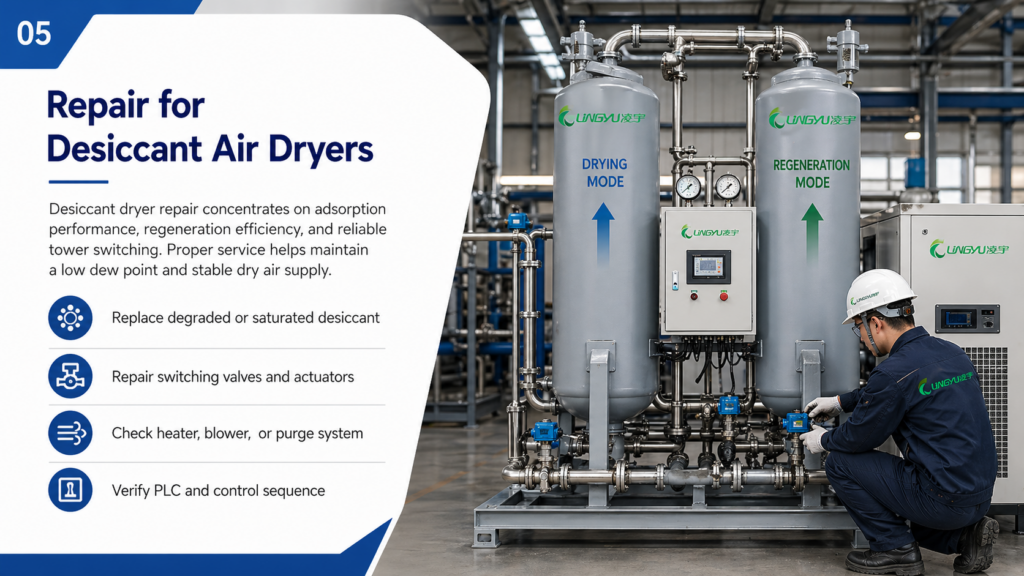
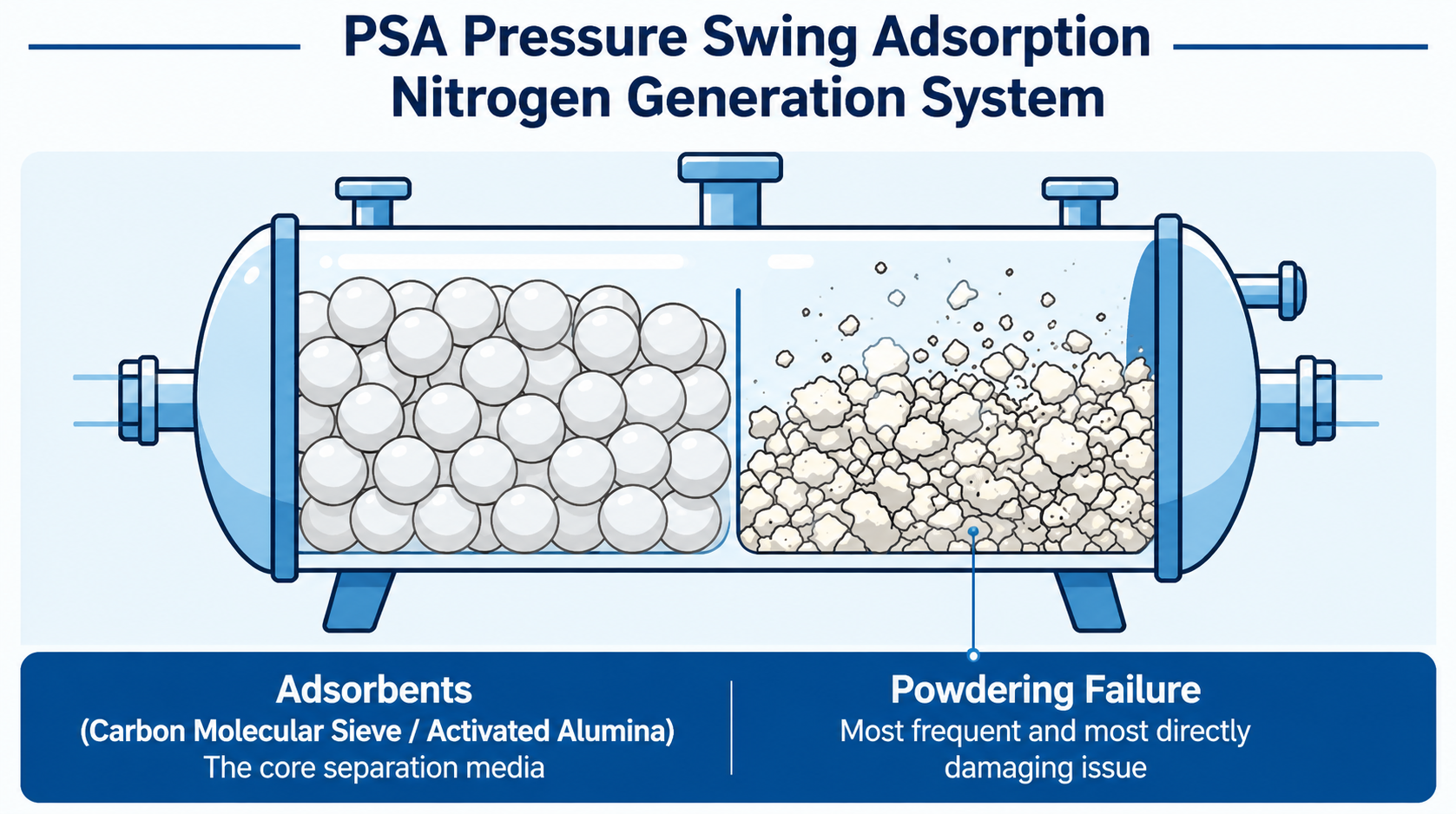
A desiccant air dryer removes moisture by adsorption. Compressed air passes through desiccant material that captures water vapor. If the regeneration cycle or drying tower operation is abnormal, the dryer will not produce sufficiently dry air.
Typical desiccant dryer repair items include:
Desiccant Replacement
Over time, desiccant becomes contaminated, degraded, or saturated. When this happens, drying performance drops. Replacing the desiccant is one of the most common repair tasks.
Valve Repair and Rebuild
In a twin-tower desiccant dryer, switching valves control airflow between towers. Worn seals, sticking valves, or actuator failure can interrupt tower alternation and reduce drying performance.
Heater and Blower Inspection
For heated or blower purge dryers, the regeneration system is critical. If heaters or blowers fail, the saturated desiccant cannot be regenerated properly.
Purge System Adjustment
In heatless or heated dryers, incorrect purge flow affects regeneration efficiency. A purge problem can lead to wet outlet air and higher operating costs.
Control System Troubleshooting
Timers, PLC systems, solenoid valves, and pressure sensors all influence dryer cycling. Faults in the control sequence can cause one tower to stay online too long or fail to regenerate correctly.
Common Air Dryer Repair Problems in Industrial Facilities
Some repair issues are especially common in real industrial working conditions.
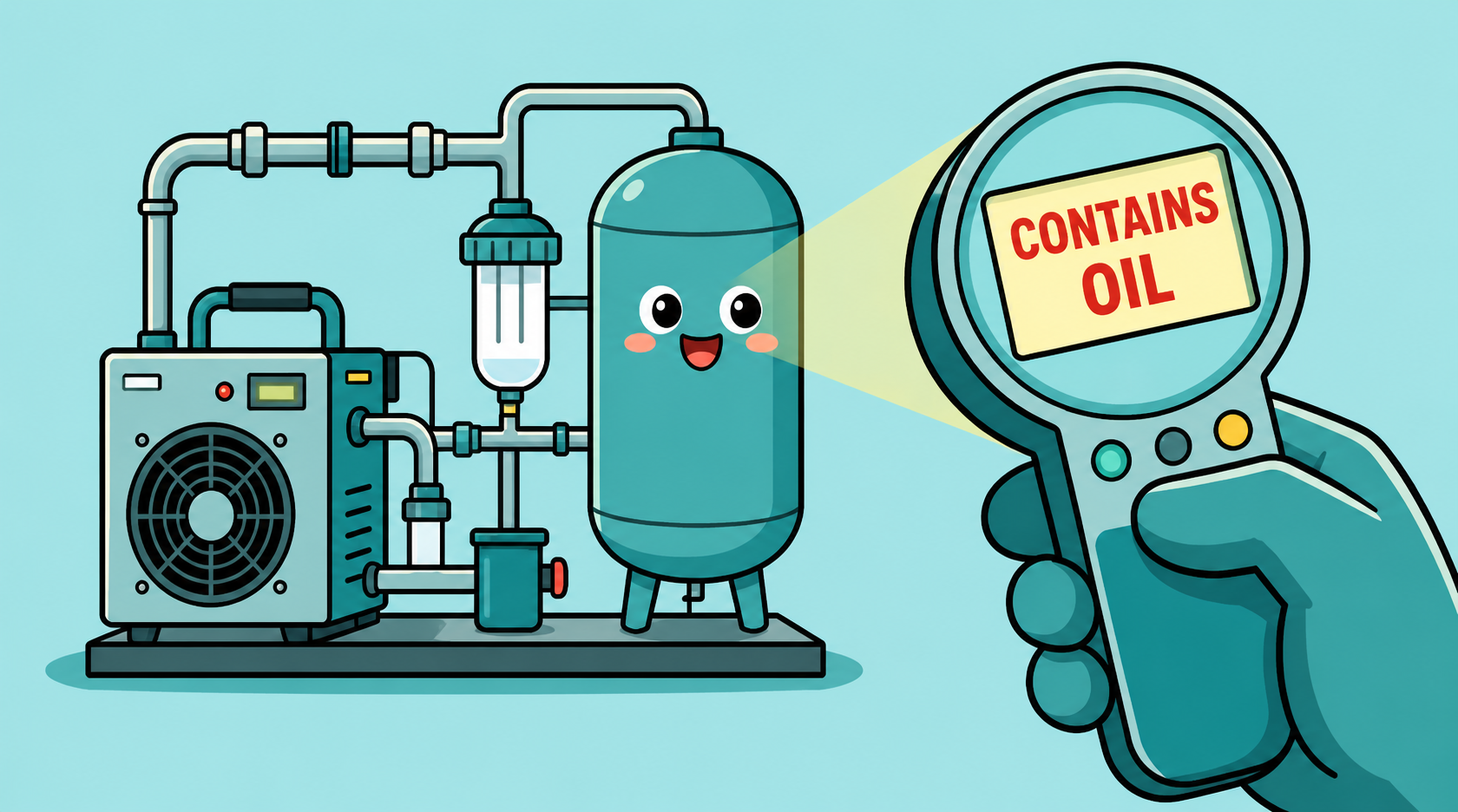
One major issue is poor inlet air quality. If upstream filtration is inadequate, oil aerosols, dust, and liquid water can enter the dryer and damage internal components.
Another common issue is oversized or undersized equipment. When the dryer does not match actual airflow demand, performance becomes unstable and internal wear increases.
Improper installation also causes repair problems. Poor ventilation, high ambient temperature, incorrect piping layout, and lack of pre-filtration can all shorten equipment life.
In many cases, the most effective repair is not only replacing damaged parts, but also correcting the operating condition that caused the failure.
Basic Steps in Air Dryer Repair
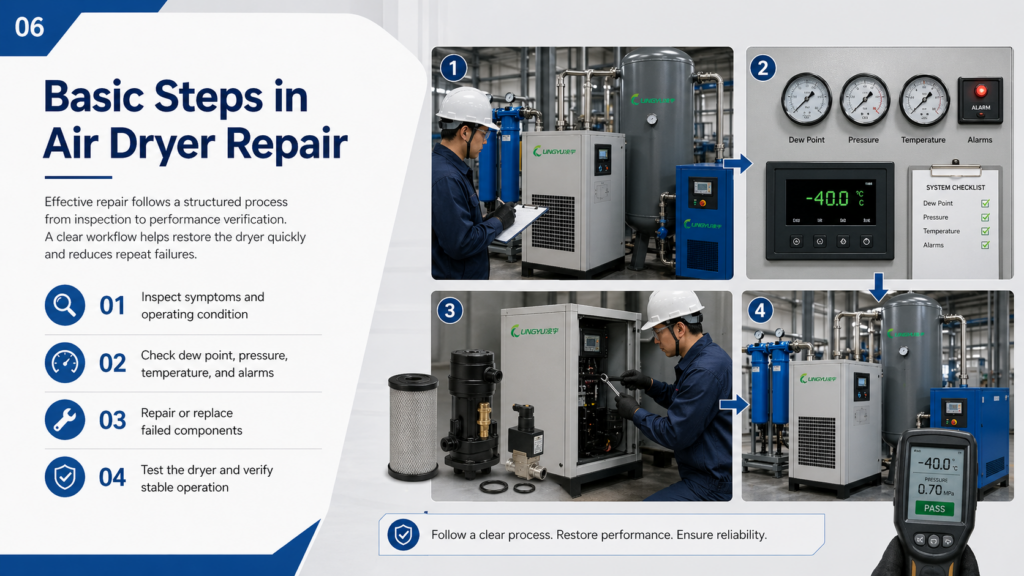
Effective air dryer repair usually follows a structured process.
First, the system must be inspected for visible symptoms such as leaks, corrosion, clogged drains, pressure drop, or abnormal noise.
Second, the operating data should be checked. Dew point, inlet temperature, outlet condition, pressure, current, and alarm history all help identify the root cause.
Third, defective components must be tested and repaired or replaced. This may include valves, drains, sensors, desiccant, heat exchangers, refrigeration parts, electrical controls, or fans.
Fourth, the full dryer should be tested after repair to confirm stable operation and proper air quality.
Finally, preventive measures should be added to reduce the chance of repeated failure.
Preventive Maintenance Reduces Repair Frequency
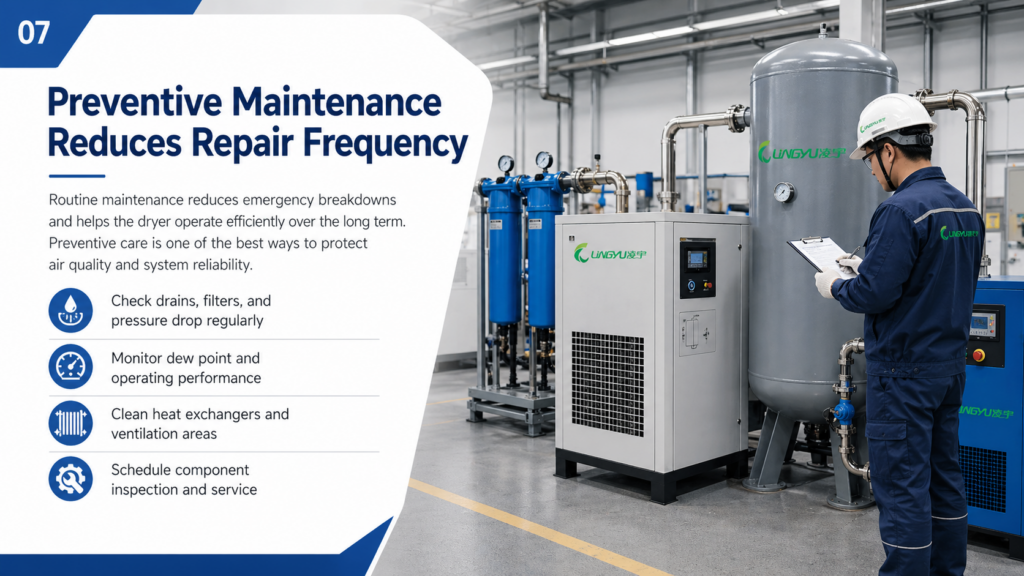
The best way to reduce emergency air dryer repair is regular maintenance. A well-maintained dryer operates more efficiently and is less likely to suffer unexpected failure.
Recommended preventive maintenance includes:
- Checking dew point regularly
- Inspecting automatic drains
- Cleaning condensers and heat exchangers
- Replacing filters on schedule
- Monitoring pressure drop
- Checking refrigerant performance
- Inspecting valves and actuators
- Replacing desiccant when needed
- Verifying controller and sensor accuracy
- Keeping the installation area clean and ventilated
Preventive maintenance helps reduce repair costs and extend equipment life.
Repair or Replace: How to Make the Right Decision
Not every failed dryer should be replaced immediately. In many cases, repair is the more economical solution, especially when the main structure is still in good condition and the fault is limited to specific components.
Repair is usually a practical choice when:
- The fault can be isolated clearly
- Replacement parts are available
- The dryer capacity still matches the application
- The machine structure remains in good condition
- Repair cost is reasonable compared with replacement value
Replacement may be more suitable when:
- The dryer is severely corroded or structurally damaged
- Repair cost is too high
- The machine is outdated and inefficient
- Spare parts are difficult to obtain
- The current dryer no longer meets process demand
A professional inspection helps determine which option is more cost-effective.
Choosing the Right Air Dryer Repair Service
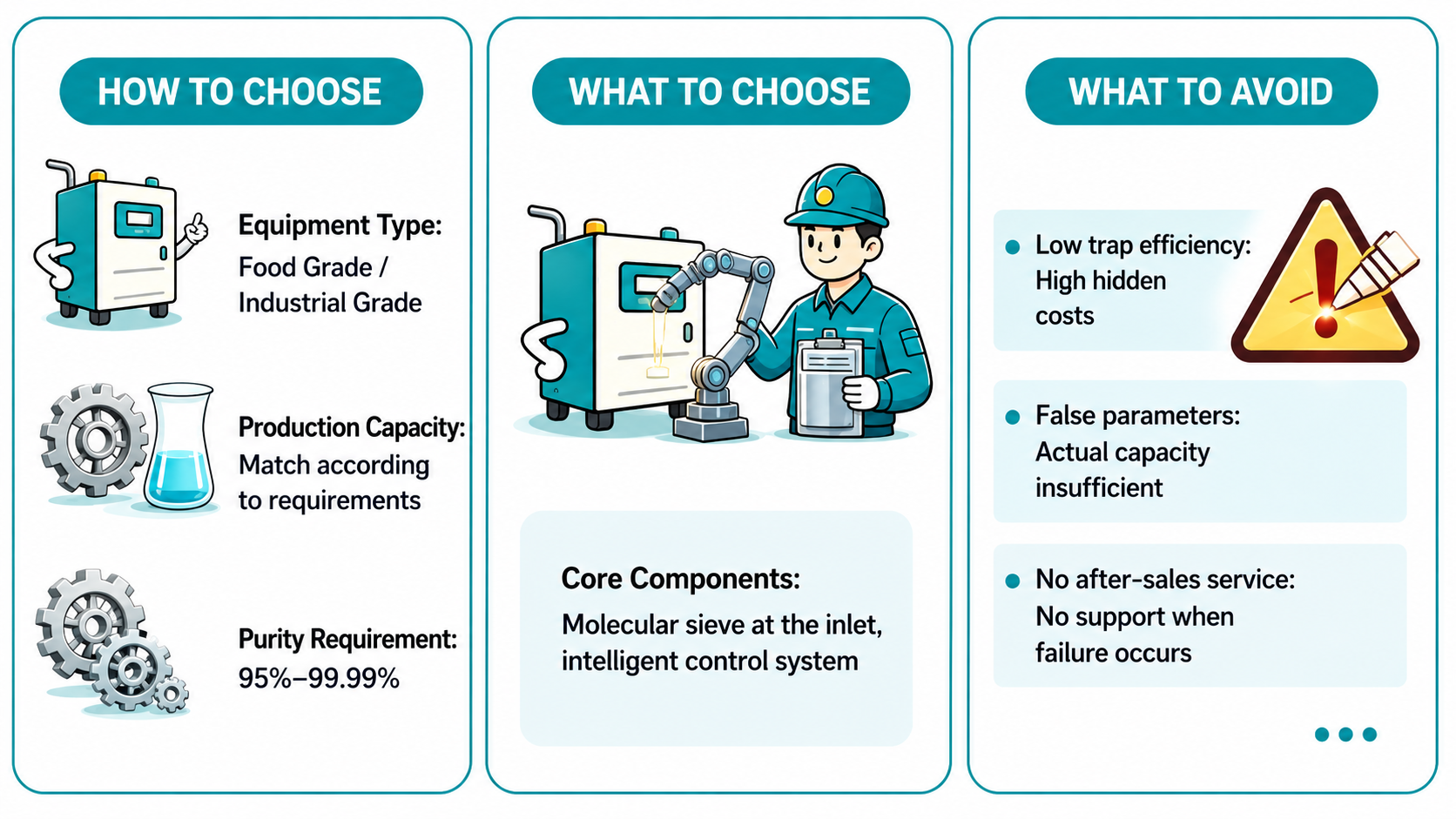
Industrial users should choose repair support carefully. A reliable service team should understand compressed air systems, dryer types, control components, and plant operating conditions.
A good repair service should offer:
- Accurate fault diagnosis
- Experience with refrigerated and desiccant dryers
- Access to suitable spare parts
- Clear maintenance recommendations
- Support for testing and commissioning
- Advice on long-term system reliability
The goal is not only to restore operation quickly, but also to improve the long-term stability of the system.
How Air Dryer Repair Protects the Full Compressed Air System
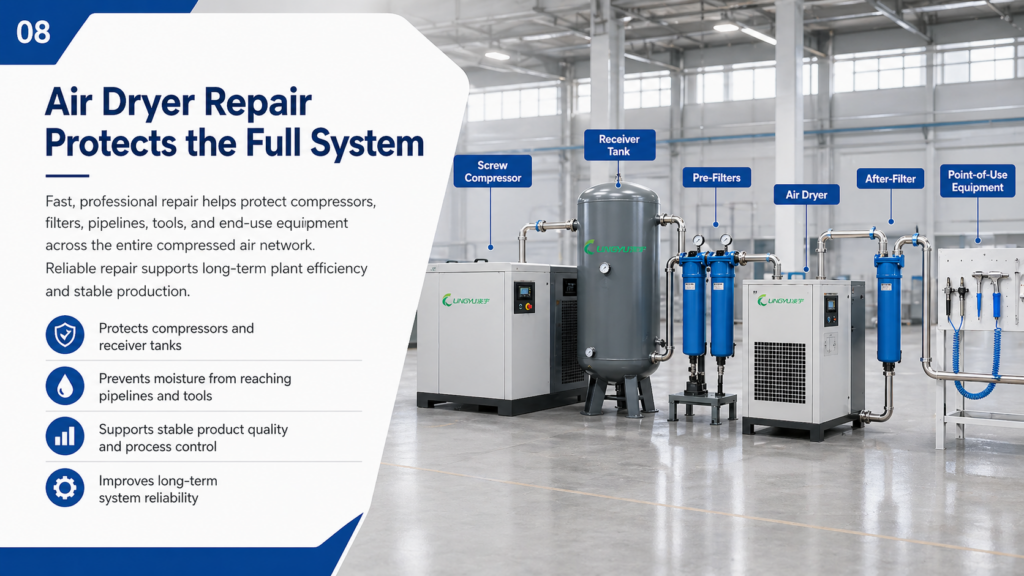
An air dryer is connected to compressors, receiver tanks, filters, pipelines, regulators, valves, and end-use equipment. When the dryer performs poorly, moisture travels across the whole network.
That is why repairing the dryer quickly protects much more than the dryer itself. It helps prevent downstream corrosion, product contamination, control problems, and service interruptions throughout the plant.
From a system perspective, air dryer repair is an important part of maintaining compressed air quality, efficiency, and production safety.
Conclusion
Air dryer repair is essential for maintaining dry, stable, and reliable compressed air in industrial systems. Whether the issue affects a refrigerated dryer or a desiccant dryer, early diagnosis and proper repair can prevent equipment damage, reduce downtime, and restore air quality quickly.
By understanding the warning signs, common failures, and maintenance priorities, industrial users can respond faster and keep their air treatment systems operating efficiently. In demanding production environments, professional repair support and regular preventive maintenance are key to long-term dryer performance and dependable plant operation.