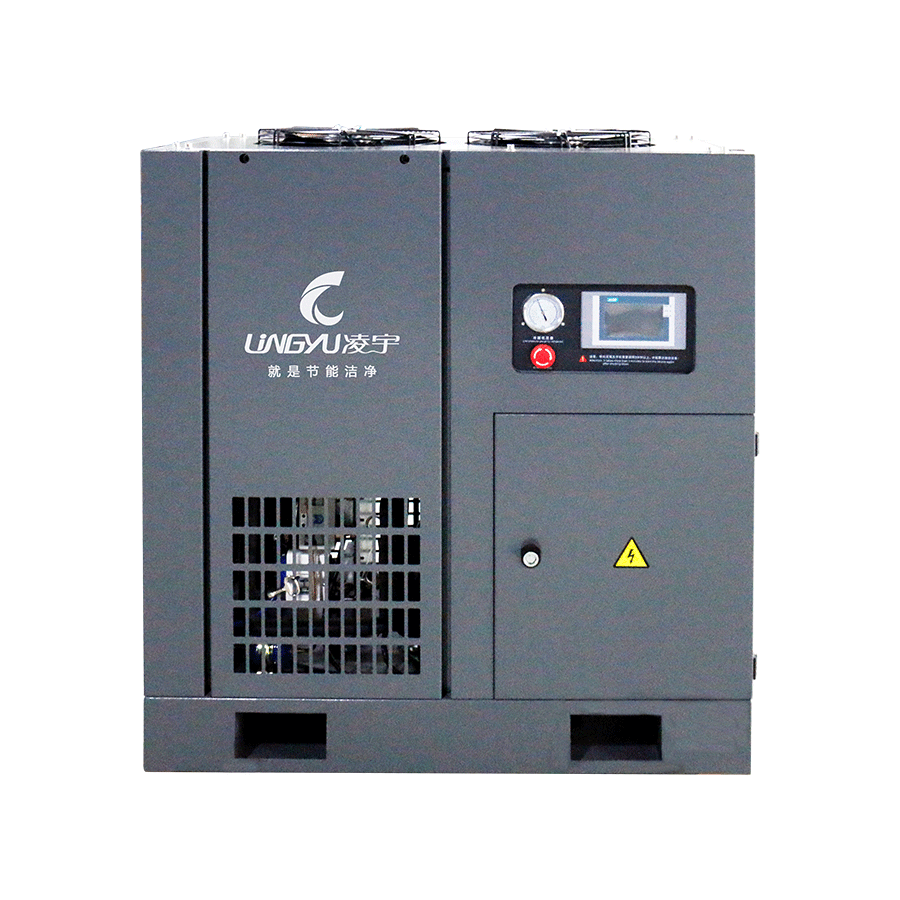
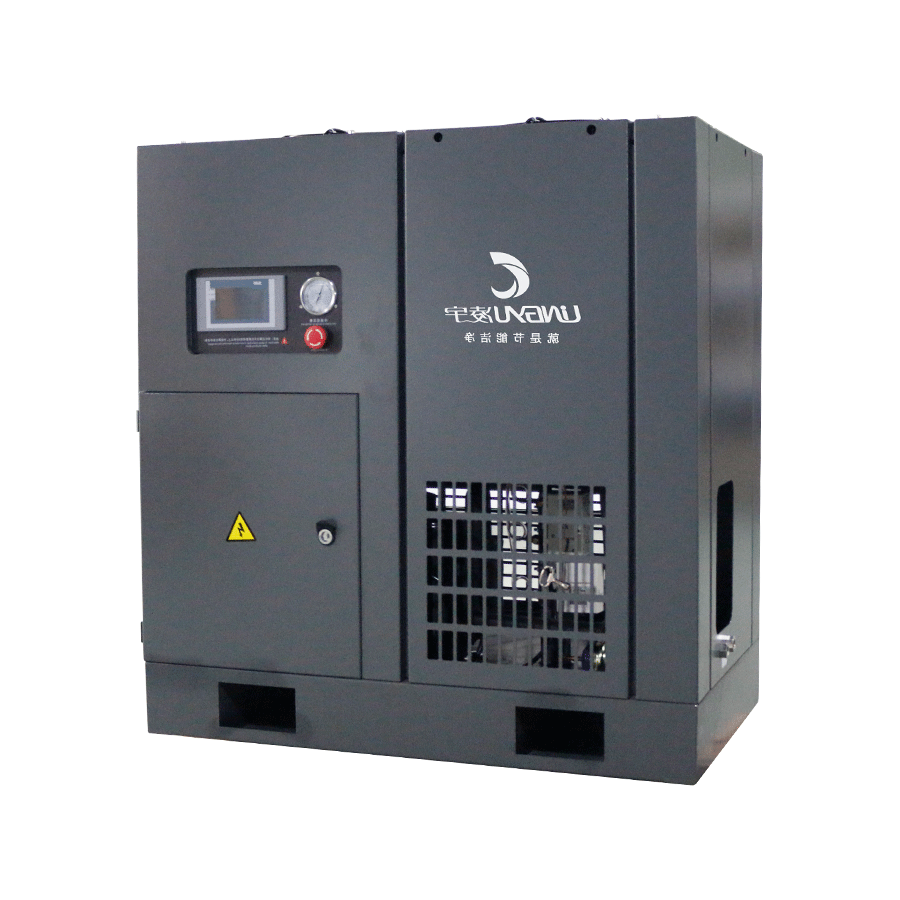
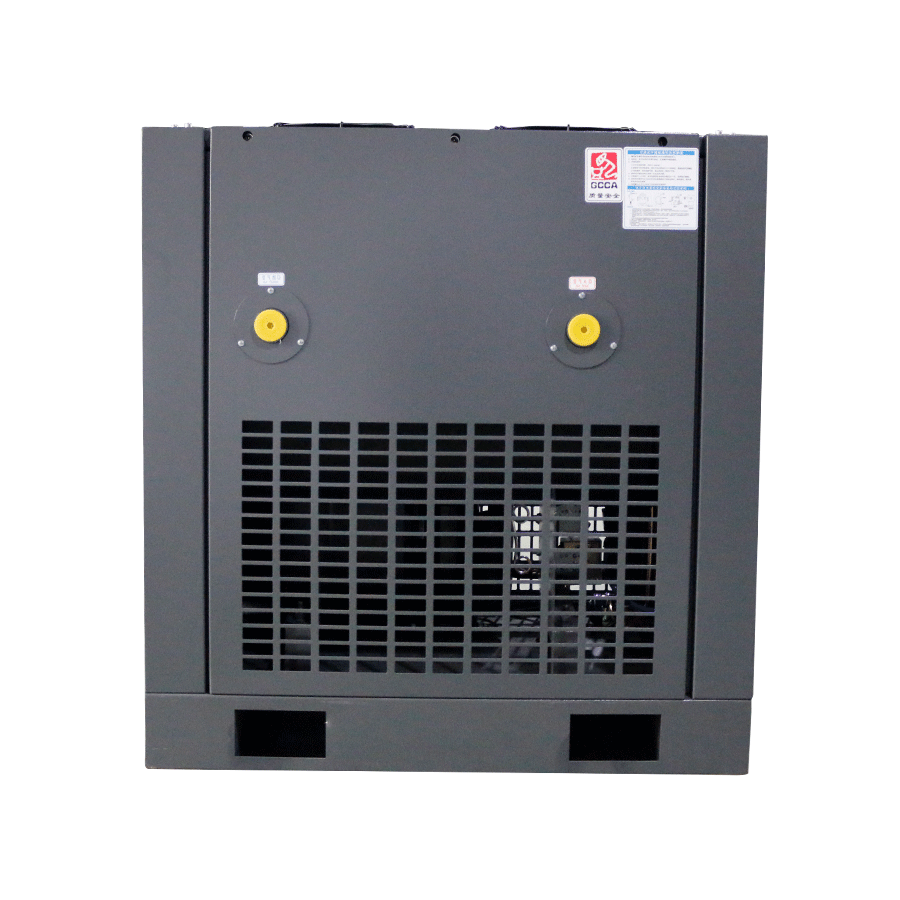
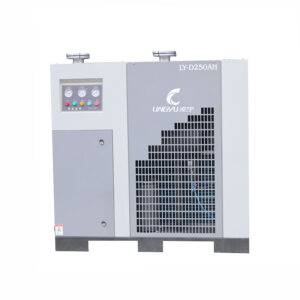
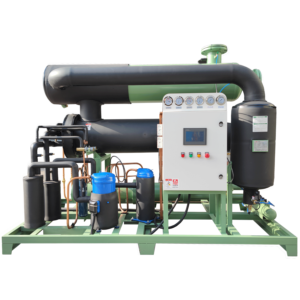
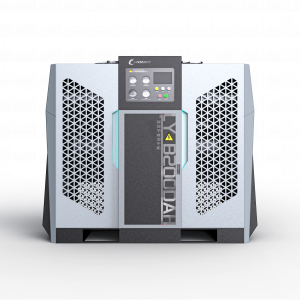
The Low Pressure Differential Refrigerated Air Dryer is designed to provide efficient moisture removal for compressed air systems while maintaining an extremely low pressure drop. It uses a refrigeration drying process to cool hot and moisture-laden compressed air, condense water vapor into liquid, and discharge the condensate before the air reaches downstream equipment.
During operation, compressed air enters the dryer and passes through the internal refrigeration and heat exchange system. As the air temperature decreases, water vapor condenses into liquid water and is separated from the airflow. The treated compressed air is then discharged with a stable pressure dew point of 2°C to 10°C, helping protect pipelines, valves, pneumatic tools, and sensitive production equipment from corrosion, contamination, and moisture-related damage.
Because the system is designed with low pressure differential technology, the pressure loss under full load remains below 0.01 MPa, helping improve the overall efficiency of the compressed air system and reduce unnecessary energy loss.
To ensure stable drying performance and reliable long-term operation, the Low Pressure Differential Refrigerated Air Dryer should be used under the following recommended conditions:
- Applicable fluids: Compressed air, non-corrosive air
- Rated inlet pressure: 0.7 MPa
- Allowable pressure range: 0.6–1.0 MPa, other pressure levels customizable
- Rated inlet temperature: 45°C
- Maximum inlet temperature: ≤ 80°C
- Pressure loss under full load: < 0.01 MPa
- Outlet pressure dew point: 2°C–10°C
- Rated ambient temperature: 35°C
- Ambient operating range: 2°C–45°C
- Cooling method: Air-cooled or water-cooled optional
For the best operating result, the dryer should be installed in a clean and well-ventilated environment with stable inlet conditions. Proper system matching and suitable pre-filtration help maintain drying efficiency, reduce pressure loss, and protect downstream equipment.
| Throughput (m³/min) | Total Power (kW) | Connection Size | Weight (kg) | Dimensions (mm) L × W × H |
|---|
| 3.8 | 1.50 | G1 1/2″ | 76 | 1000 × 600 × 1050 |
| 6.5 | 2.50 | G1 1/2″ | 95 | 1100 × 600 × 1100 |
| 10.5 | 2.70 | G2″ | 145 | 1250 × 700 × 1155 |
| 13.5 | 3.20 | G2 1/2″ | 350 | 1400 × 800 × 1200 |
| 17.0 | 4.90 | DN80 | 365 | 1500 × 950 × 1400 |
| 21.5 | 5.05 | DN80 | 380 | 1450 × 800 × 1200 |
| 25.0 | 5.20 | DN80 | 380 | 1650 × 940 × 1480 |
| 28.5 | 6.50 | DN80 | 460 | 1650 × 940 × 1480 |
| 32.0 | 6.95 | DN80 | 465 | 1650 × 940 × 1480 |
| 37.0 | 9.80 | DN100 | 680 | 1900 × 980 × 1580 |
| 45.0 | 9.80 | DN100 | 710 | 1900 × 980 × 1580 |
| 55.0 | 12.30 | DN125 | 815 | 2100 × 1000 × 1700 |
| 65.0 | 14.50 | DN125 | 880 | 2100 × 1000 × 1700 |
| 75.0 | 18.50 | DN125 | 1150 | 2400 × 1100 × 1650 |
| 85.0 | 18.80 | DN125 | 1370 | 2400 × 1100 × 1650 |
| 95.0 | 23.50 | DN150 | 1680 | 2450 × 1200 × 2250 |
| 110.0 | 28.50 | DN150 | 1850 | 2450 × 1200 × 2250 |
| 120.0 | 28.50 | DN150 | 1890 | 2450 × 1200 × 2250 |
Note: For air volume above 120 m³/min, or for special requirements related to specifications, materials, or operating temperature, please contact our company or dealer for technical support. The above data is for reference only and may change without prior notice.
In the Philippines, where high humidity, warm ambient temperatures, and seasonal heavy rainfall can increase the risk of condensation in compressed air systems, the Low Pressure Differential Refrigerated Air Dryer is especially suitable for industrial users that require stable moisture removal, minimal pressure loss, and reliable long-term operating efficiency. With a stable outlet pressure dew point of 2°C to 10°C and a full-load pressure loss of less than 0.01 MPa, this dryer is well suited for compressed air systems where both air quality and overall energy efficiency are important.
- Electronics and Electrical Manufacturing
Suitable for electronics assembly support systems, dry utility air, pneumatic tools, and moisture-sensitive production environments where stable compressed air quality helps reduce moisture-related interruptions and improve process consistency. - Food and Beverage Processing
Recommended for non-product-contact compressed air uses in food and beverage plants, including packaging support, conveying systems, pneumatic controls, and utility air networks. In warm and humid factory environments, stable refrigerated drying helps reduce condensation risk and improve day-to-day equipment reliability. - Basic Metals, CNC Machining, and Automation Systems
Applicable to machining centers, pneumatic controls, automated equipment, and metal-processing support systems where dry compressed air helps reduce moisture-related wear, improve operating stability, and protect downstream components. The low pressure differential design is especially valuable in systems where pressure efficiency affects overall plant energy use. - Laboratory Analyzers and Technical Rooms
Suitable for analytical equipment, laboratory air systems, and technical support environments where moisture control is important for stable testing conditions and equipment reliability. - Environmental Test Chambers
Used in testing environments where stable dew point control supports accurate simulation conditions and consistent operation. - Dry Sprinkler Systems and Building Utility Air
Provides dry compressed air for fire protection systems and related utility air applications, helping reduce internal corrosion and moisture accumulation in pipelines. - Printing, Medical Support, and Industrial Automation Systems
Well suited for pneumatic equipment, printing systems, automation lines, and general technical air uses where low pressure loss and reliable compressed air quality are both important for stable daily operation. - Ozone Generators and Specialized Utility Systems
Can be used where dry compressed air helps improve operating stability and reduce moisture-related impact on equipment performance. - Centralized Compressed Air Systems with Energy-Saving Priorities
Ideal for factories and plant-wide compressed air networks that want to reduce unnecessary energy loss caused by higher dryer pressure drop. The low pressure differential design makes this model especially attractive where stable moisture control and air system efficiency must be balanced. - Coastal and High-Humidity Industrial Facilities
For factories located in coastal Philippine cities or other high-humidity environments, this dryer helps reduce the moisture burden on compressed air systems while maintaining lower pressure loss and more stable downstream operation.
Explore More Industry Applications