Compressed air is one of the most essential utilities in modern industry, powering everything from pneumatic tools and automation systems to food processing and chemical production. However, moisture in compressed air can cause corrosion, equipment failure, and reduced product quality. An industrial air dryer for compressor is a critical solution that ensures dry, clean, and reliable compressed air for industrial operations.
What Is an Industrial Air Dryer?
An industrial air dryer is a system designed to remove moisture, oil, and other contaminants from compressed air. By doing so, it protects pipelines, valves, instruments, and production equipment from corrosion and water damage, while ensuring the compressed air meets the quality standards required for sensitive industrial applications.
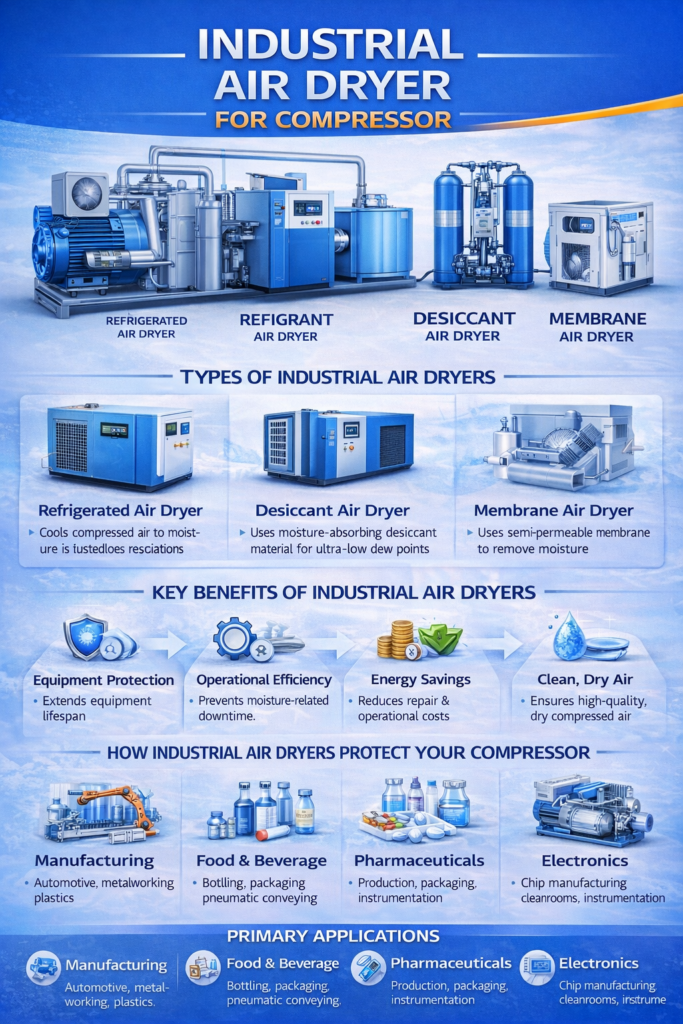
Industrial air dryers come in various types, each optimized for specific operating conditions and moisture removal requirements.
Types of Industrial Air Dryers
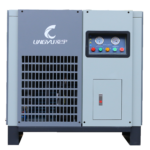
1. Refrigerated Air Dryers
Refrigerated dryers cool the compressed air to condense moisture, which is then automatically drained. They typically achieve a pressure dew point of 2–7°C (35–45°F) and are ideal for general industrial applications.
Benefits:
Reliable and low-maintenance
Cost-effective for high-volume operations
Easy installation and operation
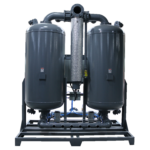
2. Desiccant Air Dryers
Desiccant dryers use moisture-absorbing materials to achieve extremely low dew points, sometimes below -40°C (-40°F), making them suitable for critical applications.
Benefits:
Ultra-dry air for sensitive equipment
Ideal for low-temperature environments
Prevents freezing and corrosion in compressed air systems
3. Membrane Air Dryers
Membrane dryers use semi-permeable fibers to separate moisture from compressed air. They are compact, lightweight, and require minimal maintenance.
Benefits:
Point-of-use applications
Minimal energy consumption
Compact footprint for smaller systems
Why Industrial Air Dryers Are Essential for Compressors
Compressed air is inherently humid, and without proper drying:
Water can condense in pipelines, causing corrosion.
Pneumatic tools and instruments may malfunction due to moisture.
Products in food, pharmaceutical, and electronics industries can be contaminated.
System efficiency and longevity are significantly reduced.
By integrating an industrial air dryer, businesses can prevent damage, reduce maintenance costs, and ensure consistent, high-quality air for production processes.
Key Benefits
Equipment Protection: Extends the lifespan of compressors, tools, and pneumatic systems.
Operational Efficiency: Prevents downtime caused by moisture-related failures.
Energy Savings: Reduces the need for costly repairs and system inefficiencies.
Compliance: Supports ISO and industry standards for compressed air quality.
Versatility: Suitable for industries including automotive, food and beverage, pharmaceuticals, and electronics.
Choosing the Right Industrial Air Dryer
When selecting an industrial air dryer for a compressor, consider:
Air Flow Capacity: Ensure the dryer can handle the peak compressed air flow.
Operating Pressure: Match dryer specifications with system pressure requirements.
Dew Point Requirements: Choose a dryer that meets the minimum dew point needed for your application.
Energy Efficiency: Consider dryers with low energy consumption to reduce operating costs.
Maintenance and Reliability: Look for easy-to-service systems with proven performance records.
Conclusion
An industrial air dryer for compressor is more than an accessory—it is a vital component for protecting equipment, maintaining efficiency, and ensuring the quality of industrial compressed air. By choosing the right type of dryer and maintaining it properly, businesses can achieve long-term operational reliability, reduced maintenance costs, and high-quality air supply for all their industrial applications.